
ChatGPT Prompts: Must-Have Best Ideas for Effortless Writing
ChatGPT prompts can completely transform the way you approach writing, whether you create blog posts, emails, social media captions, essays, product descriptions, or creative stories. Instead of staring at a blank page and waiting for inspiration to arrive, you can use smart, specific prompts to generate ideas, build outlines, refine tone, and speed up the entire writing process. The real advantage is not just writing faster—it is writing with more clarity, consistency, and confidence.
In today’s fast-moving digital world, writers often juggle deadlines, multiple formats, and the pressure to stay original. That is exactly why prompt-driven writing has become so valuable. With the right instructions, ChatGPT can act like a brainstorming partner, editor, researcher, and drafting assistant all at once. The key is knowing what kinds of prompts to use and how to shape them for the best output.
Why ChatGPT Prompts Matter for Writers
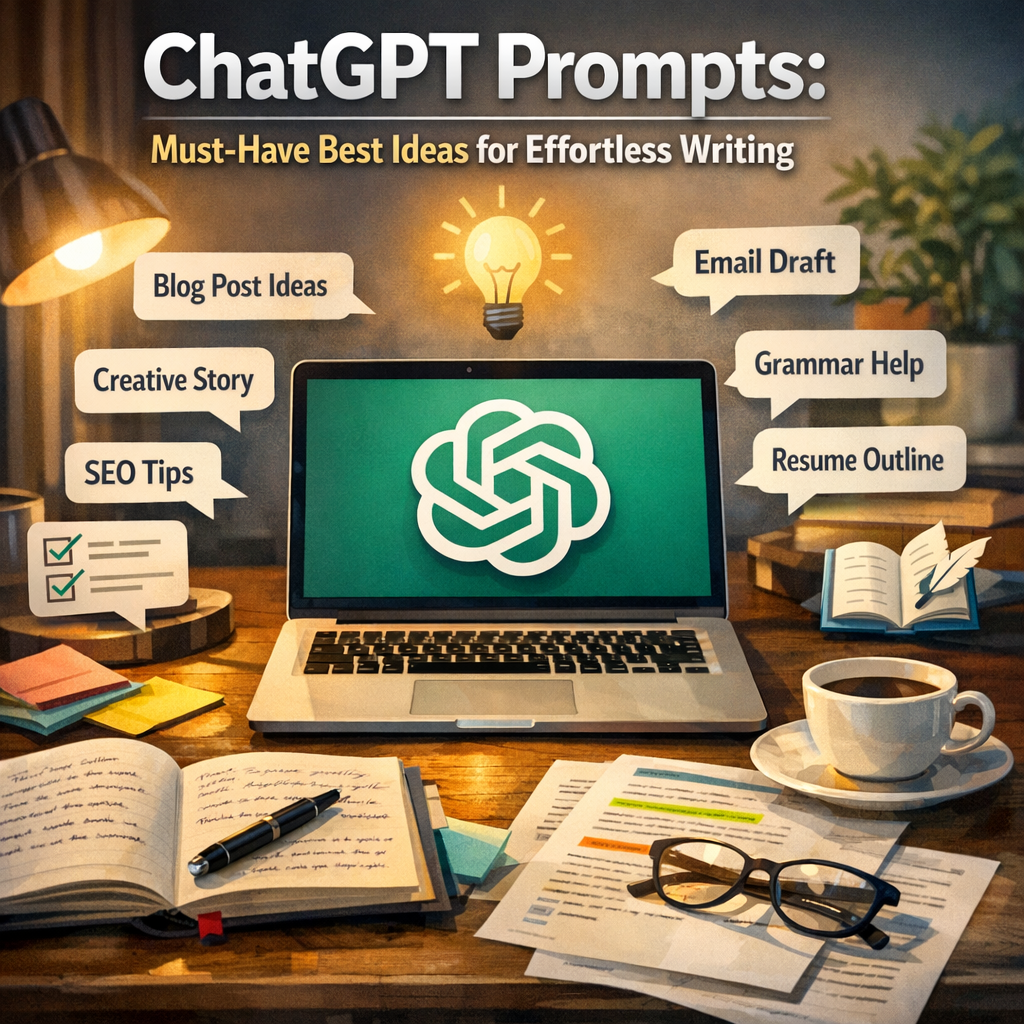
A good prompt gives direction. A vague prompt leads to generic results, but a clear one helps produce content that feels targeted and useful. Writers of all skill levels can benefit from using prompts because they reduce friction at every stage of the process.
Here is what effective prompts can help you do:
– Generate fresh topic ideas
– Build article outlines quickly
– Rewrite awkward or unclear sentences
– Adjust content for different audiences
– Create multiple headline options
– Improve tone and readability
– Overcome writer’s block
Think of prompts as instructions that unlock better collaboration with AI. The more specific you are, the more tailored the response becomes.
Best ChatGPT Prompts for Brainstorming Ideas
One of the hardest parts of writing is getting started. Brainstorming prompts are useful when you need inspiration for content topics, angles, or formats.
Try prompts like these:
– “Give me 20 blog post ideas about personal finance for beginners.”
– “Suggest unique article angles on remote work productivity.”
– “What are trending content ideas in the health and wellness space?”
– “Create social media post ideas for a sustainable fashion brand.”
– “List engaging newsletter topics for small business owners.”
These types of prompts are especially helpful for marketers, bloggers, students, and business owners who need a consistent flow of content ideas.
To improve the results, add context such as your audience, industry, and goal. For example, instead of asking for “blog ideas,” ask for “blog ideas for busy parents who want quick meal-planning tips.”
ChatGPT Prompts for Effortless Writing Outlines
Once you have a topic, the next challenge is organizing your thoughts. That is where structure-based prompts make a major difference. A strong outline saves time and helps your content stay focused.
Examples include:
– “Create a detailed outline for a 1,000-word article about time management for freelancers.”
– “Build a beginner-friendly guide structure for a blog post on email marketing.”
– “Outline a persuasive article about the benefits of daily walking.”
– “Give me an SEO-friendly article outline on home office design.”
You can also ask for outlines in a specific style. For instance:
– “Create an outline with H2 and H3 headings.”
– “Write an outline that includes a problem, solution, and actionable tips.”
– “Make the structure suitable for a how-to article.”
This approach is ideal for anyone who wants to write faster without sacrificing flow or depth.
Must-Have Prompts for Writing Better First Drafts
Drafting becomes easier when you stop trying to make everything perfect in the first attempt. AI can help produce a working version that you can refine later.
Useful drafting prompts include:
– “Write an engaging introduction for an article about healthy morning habits.”
– “Draft a conversational blog post section explaining why sleep matters.”
– “Write a professional LinkedIn post about leadership and team trust.”
– “Create a friendly email announcing a product launch.”
– “Write a persuasive product description for eco-friendly notebooks.”
If you want stronger results, define the tone and format clearly:
– “Write in a warm, human tone.”
– “Keep the language simple and easy to scan.”
– “Make it suitable for beginners.”
– “Use short paragraphs and practical examples.”
These extra instructions help the output sound more natural and aligned with your brand or purpose.
ChatGPT Prompts for Rewriting and Improving Content
Editing often takes more time than writing. Fortunately, prompts can help you sharpen messy drafts, improve flow, and remove repetition.
Here are some excellent rewriting prompts:
– “Rewrite this paragraph to sound more concise and professional.”
– “Make this sentence clearer and more engaging.”
– “Improve the readability of this section for a general audience.”
– “Turn this formal paragraph into a conversational one.”
– “Remove repetition and tighten the writing without changing the meaning.”
You can also use AI to tailor content for different platforms:
– “Convert this blog paragraph into an Instagram caption.”
– “Rewrite this article summary for an email newsletter.”
– “Turn these notes into a polished executive summary.”
This flexibility makes prompt-based writing especially useful for repurposing content across channels.
Creative ChatGPT Prompts for Storytelling and Original Content
Prompting is not only for business or academic writing. It can also support creativity. Whether you write fiction, scripts, or personal essays, creative prompts can unlock ideas you may not have explored on your own.
Try prompts such as:
– “Give me 10 story ideas based on a hidden letter found in an old house.”
– “Write a scene where two strangers discover they share the same memory.”
– “Create five opening lines for a mystery novel.”
– “Generate character backstories for a fantasy world.”
– “Suggest unexpected plot twists for a family drama.”
You can also combine genres, moods, and settings to make prompts more unique. For example: “Write a suspenseful story premise set in a quiet coastal town during winter.”
How to Write Better Prompts for Better Results
The quality of the output depends heavily on the quality of the input. If you want better writing support, prompt with intention.
Here are a few simple rules:
Be specific
Instead of “write an article about marketing,” try “write a beginner-friendly article about email marketing strategies for small online stores.”
Include the audience
Mention who the content is for, such as students, professionals, parents, or entrepreneurs.
Set the tone
Use words like conversational, professional, friendly, persuasive, witty, or authoritative.
Define the format
Ask for bullet points, outlines, FAQs, social posts, or full article sections depending on what you need.
Ask for revisions
Do not settle for the first output. Ask for shorter, clearer, stronger, or more engaging versions.
Prompt writing is a skill, and it improves with practice.
Common Mistakes to Avoid When Using ChatGPT Prompts
While AI is powerful, it still needs thoughtful guidance. Many people get weak results because they make avoidable mistakes.
Watch out for these common issues:
– Using prompts that are too broad
– Forgetting to mention audience or purpose
– Expecting final-ready content without editing
– Not fact-checking important claims
– Relying on generic instructions repeatedly
The best results usually come from a back-and-forth process. Ask, review, refine, and personalize.
Final Thoughts
Effortless writing does not mean careless writing. It means removing unnecessary struggle so you can focus on ideas, clarity, and impact. When used well, ChatGPT can help you brainstorm faster, structure content better, draft with less stress, and polish your work more efficiently.
Whether you are a blogger, business owner, student, marketer, or creative writer, having a list of reliable prompts can save time and improve results. Start with simple prompt templates, learn what kind of instructions produce the strongest output, and build your own prompt library over time. Once you do, writing becomes less intimidating and far more productive.