
AI Video Enhancer: Must-Have Tool for Stunning Quality
AI video enhancer technology is changing the way creators, businesses, and everyday users improve their footage. What once required expensive software, technical editing skills, and hours of manual work can now be done faster and more accurately with artificial intelligence. Whether you are restoring old clips, sharpening low-resolution footage, reducing noise, or improving color balance, this type of tool can dramatically raise production value with minimal effort.
In a world where video dominates social media, marketing, education, and entertainment, quality matters more than ever. Viewers quickly lose interest in blurry, shaky, or poorly lit content. That is why more people are turning to smart enhancement tools to make their videos look polished and professional without needing a full post-production team.
What Is an AI Video Enhancer?
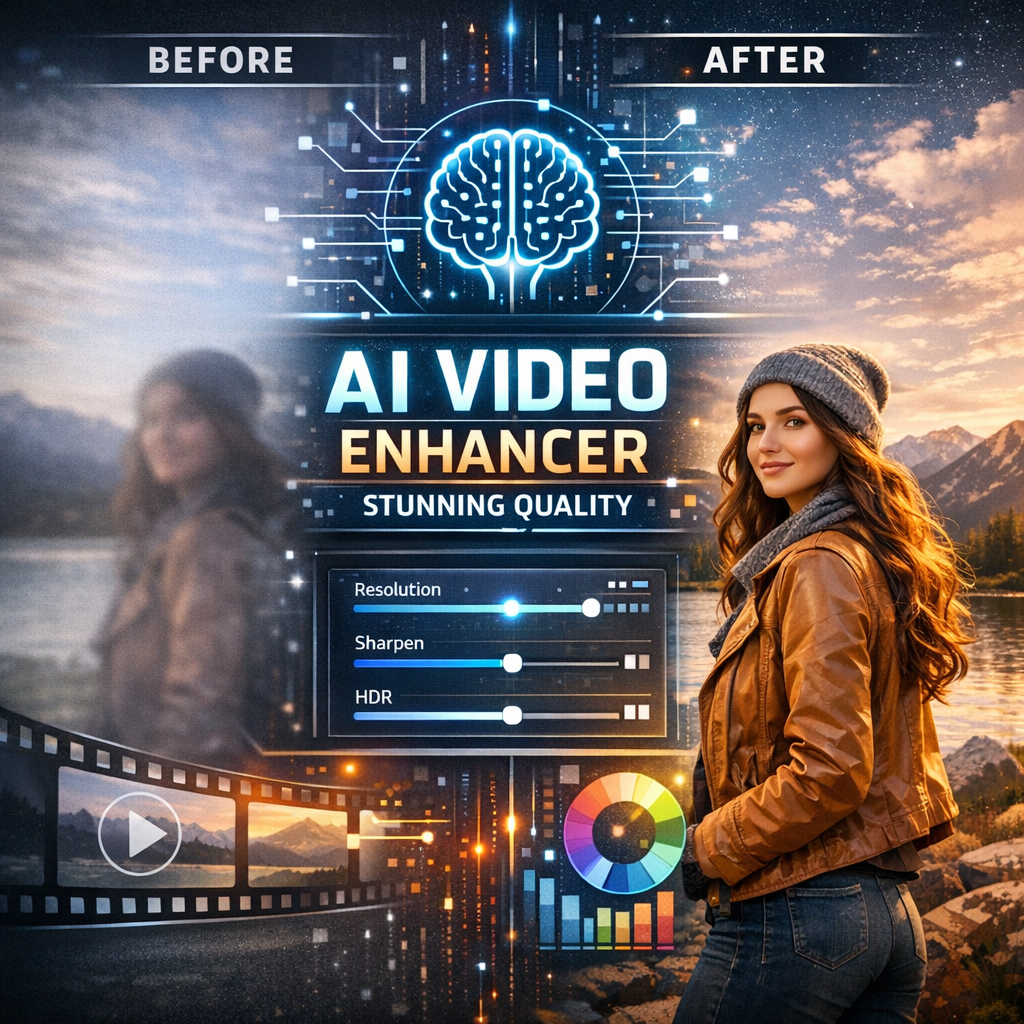
An AI video enhancer is a software tool that uses machine learning and computer vision to automatically improve video quality. Instead of relying only on manual controls, it analyzes each frame and applies corrections based on patterns it has learned from large datasets.
These tools can perform a range of tasks, including:
– Upscaling low-resolution video to higher resolutions
– Sharpening soft or blurry details
– Reducing visual noise and grain
– Improving brightness and contrast
– Correcting color issues
– Smoothing motion and increasing frame rates
– Restoring old or damaged footage
The biggest advantage is efficiency. Traditional editing can be time-consuming and often requires experience. AI simplifies the process by making intelligent adjustments that would normally take much longer to complete by hand.
Why Video Quality Matters More Than Ever
Online audiences have become more selective. From YouTube and TikTok to product demos and online courses, people expect crisp, clean visuals. A high-quality video builds trust, keeps viewers engaged, and reflects positively on your brand or message.
Poor-quality footage can create several problems:
– It looks unprofessional
– It distracts from the content itself
– It lowers viewer retention
– It reduces the impact of marketing campaigns
– It can make educational or instructional content harder to follow
Even if your message is strong, presentation still matters. Better video quality helps your work stand out in a crowded digital space.
Key Benefits of Using an AI Video Enhancer
Faster Editing Workflow
One of the most appealing benefits is speed. AI-driven tools can process enhancement tasks automatically, saving editors and creators a huge amount of time. This is especially useful for content teams, freelancers, and businesses producing videos regularly.
Better Results with Less Effort
Not everyone has advanced editing skills. AI gives beginners access to high-end improvements without a steep learning curve. In many cases, users can simply upload a file, choose enhancement settings, and let the software do the rest.
Restoration of Old Footage
Old family videos, archived interviews, or historical recordings can often be revived using AI. Scratches, noise, blur, and low resolution can be reduced, making valuable footage easier to watch and preserve.
Improved Content Performance
Higher-quality visuals often lead to stronger viewer engagement. For businesses and creators, that can mean more watch time, more shares, and better overall results from video campaigns.
How an AI Video Enhancer Works
AI Video Enhancer and Frame Analysis
An AI video enhancer works by examining each frame of a video and identifying areas that need improvement. It may detect edges that need sharpening, dark scenes that require brightness correction, or grain that should be reduced.
The system compares what it sees against learned models to predict how the frame should look after enhancement. It then applies adjustments consistently across the full clip to maintain visual continuity.
Smart Upscaling
Upscaling is one of the most popular features. Rather than simply stretching pixels like traditional resizing methods, AI predicts additional detail and creates a sharper, more natural-looking image. This is particularly useful when converting older or lower-quality footage for modern screens.
Motion and Stability Improvements
Some tools also improve frame flow and reduce shakiness. This can result in smoother playback, especially for action footage or clips recorded on mobile devices without stabilization.
Who Should Use These Tools?
AI-powered video enhancement is useful for a wide range of users.
Content creators can improve social media videos, YouTube uploads, and short-form content quickly.
Businesses can polish product videos, ads, explainer content, and client presentations to create a stronger brand image.
Educators and trainers can make online lessons clearer and easier to watch, especially when using older recordings or screen captures.
Filmmakers and editors can speed up certain post-production tasks and restore archival material more effectively.
Everyday users can enhance vacation clips, family videos, and smartphone footage without needing professional editing knowledge.
What to Look for in an AI Video Enhancer
Not all tools offer the same quality or features. When choosing one, it helps to consider the following:
– Resolution support: Can it handle HD, 4K, or higher?
– Noise reduction quality: Does it clean footage without making it look overly soft?
– Color enhancement: Are color corrections natural and balanced?
– Ease of use: Is the interface beginner-friendly?
– Processing speed: How long does it take to enhance a file?
– Output options: Can you export in the formats you need?
– Batch processing: Useful if you work on multiple videos at once
A good tool should balance automation with customization, giving users both convenience and control.
Common Use Cases
These tools are especially valuable in practical, real-world scenarios. For example:
– Enhancing old home videos for family archives
– Improving low-light footage from events
– Upgrading recorded webinars for republishing
– Refining smartphone videos for social media
– Preparing marketing videos for high-resolution displays
– Restoring footage for documentaries or news projects
The ability to quickly improve imperfect footage means fewer reshoots and better use of existing content.
The Future of Video Enhancement
Artificial intelligence in video editing is still evolving. As models become more advanced, users can expect even better detail recovery, more realistic upscaling, and smarter correction of lighting, color, and motion issues. Future tools may also offer more real-time enhancement, allowing creators to improve footage instantly as they edit or even while recording.
This growing accessibility is making professional-looking video quality achievable for almost anyone. What used to be limited to studios and specialists is now becoming part of everyday content creation.
Final Thoughts
Video quality can shape how your content is perceived, no matter the platform or purpose. An AI-powered enhancement tool offers a practical and effective way to improve footage, save time, and achieve more polished results. From restoring treasured memories to boosting the impact of business content, this technology has become a valuable part of modern video production.
If you want clearer visuals, smoother playback, and a more professional finish without spending endless hours editing, this kind of solution is well worth exploring.