
AI User Behavior Analysis: Must-Have Best Insights for Growth
AI User Behavior Analysis helps businesses move beyond guesses and make smarter decisions based on how people actually interact with products, platforms, and content. Instead of relying only on surface-level metrics like page views or clicks, companies can use artificial intelligence to uncover patterns, predict intent, reduce churn, and create better customer experiences. In a competitive market, understanding user behavior at a deeper level is no longer optional—it is a major driver of growth.
Why user behavior matters more than ever
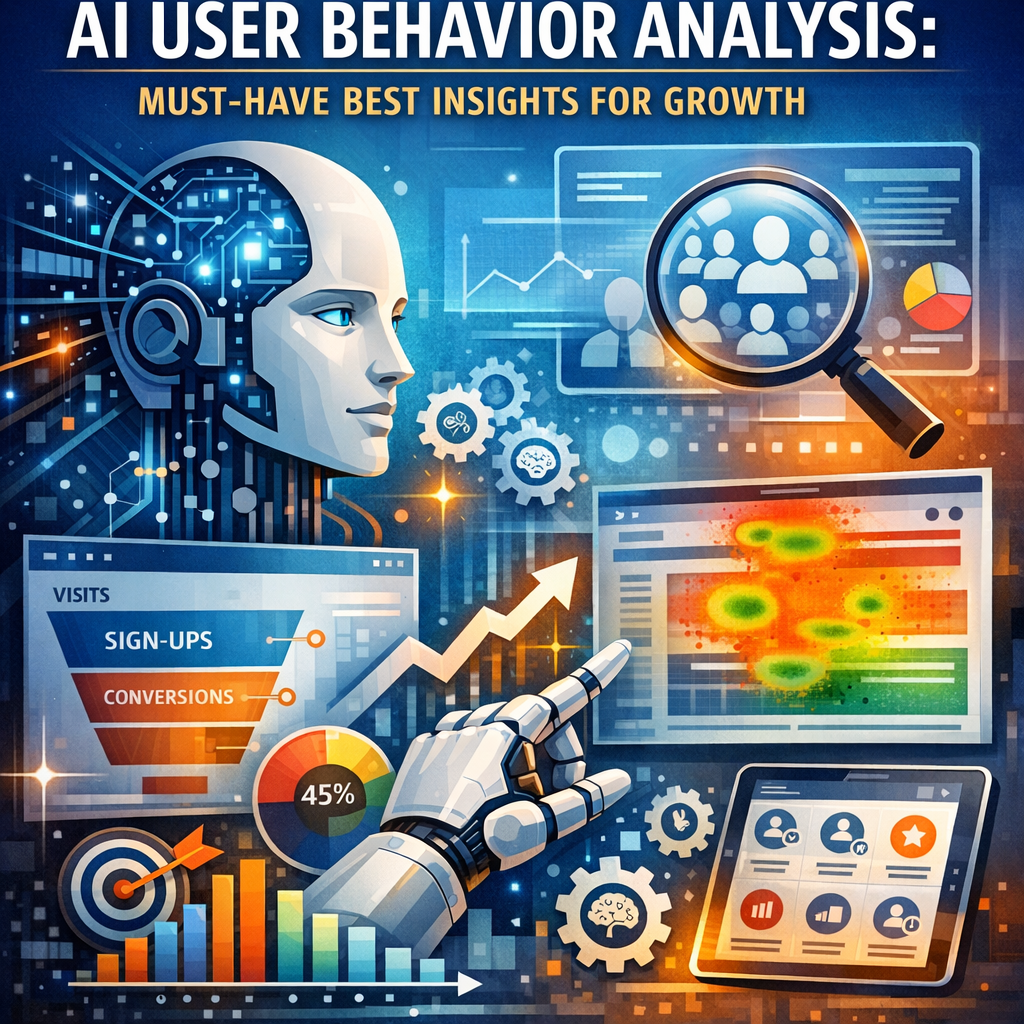
Every digital business collects data. Websites track visits, apps measure engagement, and online stores monitor browsing and purchases. But raw data alone does not create value. The real advantage comes from understanding what those actions mean.
User behavior analysis looks at how people move through a product or platform, where they hesitate, what they ignore, and what motivates them to convert. AI makes this process faster and more accurate by identifying connections that human analysts might miss. It can detect trends across massive datasets, recognize unusual behavior, and generate insights in real time.
This matters because modern users expect personalized, seamless experiences. If a business cannot understand its audience, it risks losing attention, trust, and revenue.
How AI User Behavior Analysis improves business growth
AI-powered behavior analysis supports growth in several practical ways. It does not just explain what happened—it often helps predict what will happen next.
1. Better personalization
AI can analyze browsing habits, purchase history, time spent on pages, and interaction patterns to deliver more relevant experiences. This could include product recommendations, tailored content, personalized offers, or smarter onboarding flows.
When users feel that a platform understands their needs, they are more likely to stay engaged and take action.
2. Higher conversion rates
One of the biggest benefits of AI is its ability to uncover friction points in the customer journey. For example, it may reveal that users frequently abandon a form at a certain step, lose interest after viewing a pricing page, or struggle to navigate a mobile interface.
By spotting these barriers early, businesses can improve design, simplify processes, and increase conversions.
3. Stronger customer retention
Retention is often more profitable than acquisition. AI helps identify early signs of churn by tracking changes in behavior, such as declining session frequency, reduced feature usage, or incomplete actions.
With that insight, teams can intervene proactively through targeted messaging, support outreach, or retention campaigns before users leave.
4. Smarter product development
Behavior data is a direct source of product feedback. AI can cluster users by habits and preferences, helping teams see which features drive value and which ones create confusion. This allows businesses to prioritize updates based on evidence rather than assumptions.
The result is a product roadmap that aligns more closely with real customer needs.
Key insights businesses should focus on
Not every metric is equally useful. AI works best when organizations focus on behavior signals that connect directly to growth goals.
AI User Behavior Analysis and the most valuable metrics
Here are some of the most important areas to monitor:
Engagement depth
This goes beyond simple visits. It includes time spent, scroll behavior, feature interaction, repeat sessions, and completion of meaningful actions. High engagement often signals strong interest and product-market fit.
User journey patterns
AI can map the paths users take before converting, dropping off, or upgrading. Understanding common routes makes it easier to optimize each stage of the funnel.
Intent signals
Some behaviors show stronger buying intent than others. Repeated visits to pricing pages, comparisons between plans, or adding items to a cart multiple times are all examples. AI helps rank these actions by predictive value.
Friction points
These are places where users pause, abandon, or behave unpredictably. AI can highlight where experience problems exist, especially across different devices or audience segments.
Cohort behavior
Not all users behave the same way. AI can segment users by acquisition source, geography, device, lifecycle stage, or usage pattern. This reveals which groups are most valuable and which ones need more support.
Real-world use cases across industries
AI-based behavior analysis is useful in nearly every digital environment.
In e-commerce, it helps recommend products, predict cart abandonment, and identify which shoppers are ready to buy.
In SaaS, it supports onboarding optimization, feature adoption analysis, and churn prediction.
In media and publishing, it improves content recommendations, session duration, and subscriber retention.
In finance and security, it can detect fraud or suspicious activity by flagging behavior that differs from normal usage patterns.
In healthtech and education, it can identify engagement trends, learning gaps, or usage drop-offs that require intervention.
The core value is the same across sectors: better insight leads to better decisions.
Common challenges to watch out for
While AI offers major advantages, it is not magic. Poor implementation can lead to weak results.
One challenge is data quality. If tracking is incomplete or inconsistent, the analysis will be unreliable. Clean, structured data is essential.
Another issue is overreliance on vanity metrics. AI can process huge volumes of information, but teams still need to focus on metrics tied to business outcomes.
There is also the matter of privacy and ethics. Companies must be transparent about data collection, follow regulations, and use AI responsibly. Trust is a long-term asset, and careless use of user data can damage it quickly.
Finally, businesses need cross-team alignment. Insights are most effective when marketing, product, customer success, and leadership all work from the same behavioral understanding.
Best practices for getting started
If a company wants stronger results from AI-based behavior analysis, a few principles make a big difference:
– Define clear growth goals before collecting more data
– Track meaningful user events, not just traffic numbers
– Use AI to support decisions, not replace human judgment
– Segment users to uncover more precise patterns
– Test changes based on insights and measure the impact
– Review models regularly to keep predictions accurate
– Prioritize privacy, transparency, and compliance
Starting small is often the smartest approach. A business might first focus on churn prediction, conversion optimization, or personalized recommendations, then expand its use of AI as its data maturity improves.
The future of growth is behavioral intelligence
Businesses that understand user behavior have a major competitive edge. AI turns scattered activity into actionable intelligence, helping teams see what users want, what they struggle with, and what drives long-term loyalty.
Growth today is not just about attracting more people. It is about learning from them continuously and improving every interaction. Companies that adopt AI-driven behavior analysis thoughtfully can create more relevant experiences, make faster decisions, and unlock sustainable growth in a crowded digital landscape.
In the years ahead, the brands that grow fastest will likely be the ones that listen best—and AI gives them the tools to do exactly that.