
AI Low Code Tools: Best Must-Have Solutions for Effortless Development
AI low code tools are transforming the way businesses, startups, and even non-technical teams build digital products. What once required large development teams, long project timelines, and complex coding knowledge can now be achieved much faster with intuitive visual interfaces and artificial intelligence-powered assistance. From automating workflows to building apps, dashboards, and internal tools, these platforms make development more accessible and efficient than ever.
Why AI-Powered Low Code Platforms Matter
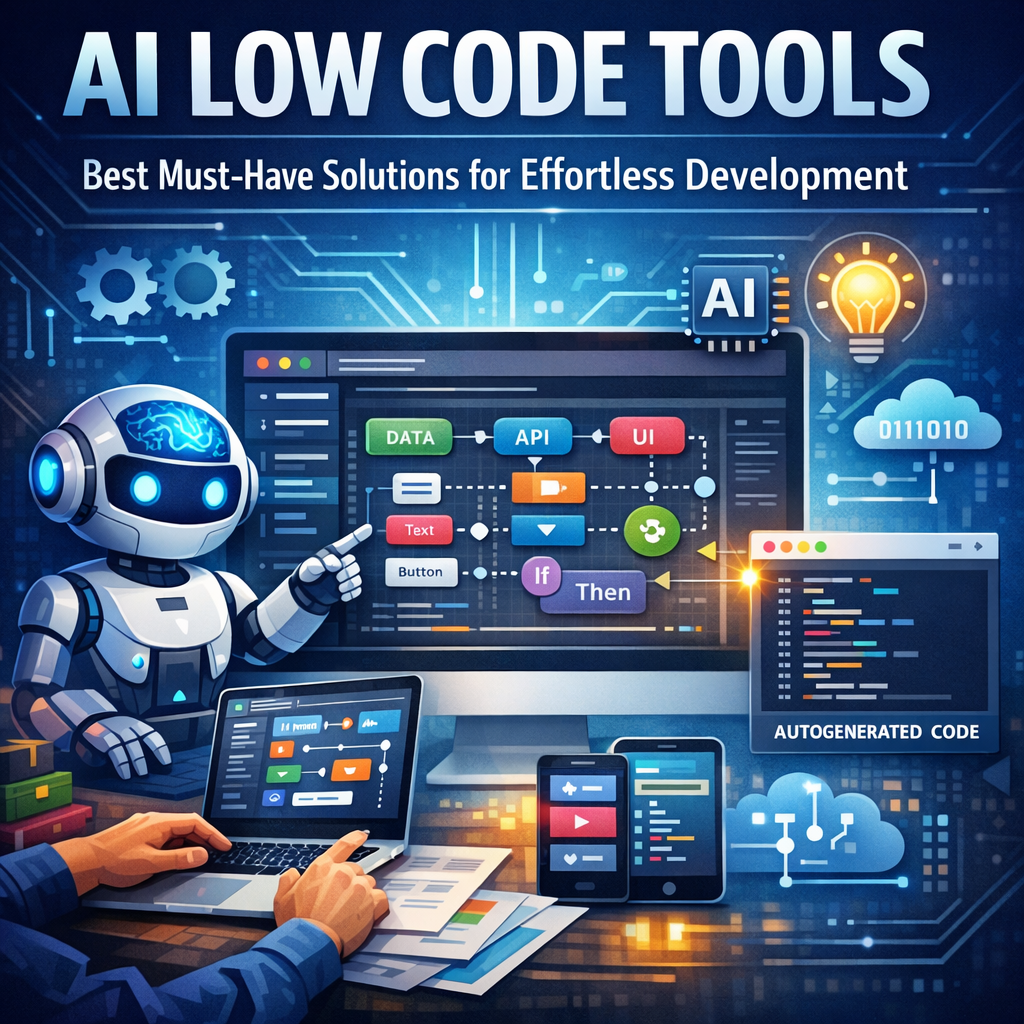
Traditional software development is powerful, but it can also be expensive, slow, and resource-heavy. Many companies face growing demands for digital transformation while struggling with limited developer bandwidth. This is where low code platforms become especially valuable.
By combining drag-and-drop design with AI assistance, these tools help users create applications with less manual coding. AI can suggest workflows, generate logic, automate repetitive tasks, and even help optimize user experiences. This means teams can focus more on solving business problems and less on technical complexity.
Key benefits include:
– Faster application development
– Reduced dependency on large engineering teams
– Lower development and maintenance costs
– Easier collaboration between technical and non-technical users
– Improved automation and smarter workflow creation
Best Use Cases for AI Low Code Tools
AI-enhanced low code solutions are useful across many industries and departments. Their flexibility makes them ideal for both simple internal tools and customer-facing applications.
Some of the most common use cases include:
1. Internal Business Applications
Organizations often need custom apps for HR, finance, operations, and project management. Low code platforms allow these tools to be built quickly without starting from scratch.
2. Workflow Automation
AI can help automate repetitive processes such as approvals, notifications, data entry, and ticket routing. This improves productivity and reduces human error.
3. Customer Service Solutions
Businesses can create portals, chatbots, help desk tools, and self-service platforms using low code environments with AI support.
4. Data Dashboards and Reporting
Many low code tools offer integrations with databases and analytics services, making it easier to build live dashboards and reporting systems.
5. Rapid Prototyping
Startups and product teams can test ideas quickly, gather feedback, and iterate without investing heavily in full custom development at the early stage.
AI Low Code Tools Businesses Should Consider
Not all platforms offer the same strengths. Some focus on enterprise app building, while others are best for automation, integrations, or internal operations. Here are some of the top categories and examples worth considering.
Microsoft Power Apps
Microsoft Power Apps is one of the best-known low code platforms, especially for companies already using the Microsoft ecosystem. It integrates well with Microsoft 365, Dynamics, SharePoint, and Azure services.
Its AI capabilities support app creation, automation, and business logic generation. For enterprises, it offers strong scalability and governance.
Best for: Microsoft-based businesses, enterprise workflows, internal applications
OutSystems
OutSystems is a robust platform designed for more advanced low code development. It supports enterprise-grade applications and includes AI-assisted development features to speed up app design and deployment.
It is often chosen by larger organizations that need performance, customization, and security at scale.
Best for: Large enterprises, complex app development, scalable digital solutions
Mendix
Mendix is a strong option for collaborative development. It enables business and IT teams to work together while using visual models and AI guidance to accelerate projects.
The platform supports web and mobile app development and is especially useful for organizations focused on innovation and fast iteration.
Best for: Team collaboration, digital transformation, enterprise mobility
Appian
Appian is widely recognized for process automation and workflow management. Its combination of low code development and AI-powered automation makes it useful for businesses managing complex operational processes.
It is especially effective in industries like healthcare, banking, and government where efficiency and compliance matter.
Best for: Process automation, case management, regulated industries
Bubble
Bubble is popular among startups, entrepreneurs, and creators who want to build web applications without deep coding skills. It offers visual development tools and expanding AI integrations that help users build marketplaces, SaaS products, and customer-facing apps.
Best for: Startups, MVPs, founders, web app creation
Zapier Interfaces and Automation Tools
Zapier is best known for automation, but it has expanded into low code app-building features. With AI enhancements, users can create lightweight tools, automate workflows, and connect thousands of applications with minimal effort.
Best for: Automation-first teams, integrations, simple workflow apps
Features to Look for in AI Low Code Tools
Choosing the right platform depends on your goals, budget, and technical requirements. Before selecting a solution, it helps to evaluate the following features.
Ease of Use
A good low code platform should be intuitive enough for non-developers while still offering enough flexibility for technical teams.
AI Assistance
Look for tools that provide meaningful AI features such as workflow suggestions, code generation, data mapping, chatbot creation, or predictive analytics.
Integration Options
The best platforms connect easily with CRM systems, databases, cloud storage, communication tools, and third-party apps.
Scalability
Some tools are great for prototypes but struggle with enterprise demands. Make sure the platform can grow with your business.
Security and Compliance
For businesses handling sensitive data, strong security controls and compliance support are essential.
Customization
Even in a low code environment, some projects require custom scripts, APIs, or advanced logic. Flexibility matters.
How AI Is Improving Low Code Development
The addition of artificial intelligence has taken low code platforms far beyond simple drag-and-drop builders. AI now helps teams work smarter throughout the entire development process.
For example, AI can:
– Recommend app layouts and workflows
– Generate formulas or backend logic
– Identify errors before deployment
– Suggest automation opportunities
– Improve chatbot conversations
– Analyze business data for insights
– Speed up testing and optimization
This shift reduces development friction and makes it easier for teams to launch useful applications quickly.
Challenges to Keep in Mind
While these tools offer clear advantages, they are not perfect for every situation. Highly specialized systems or applications requiring deep custom engineering may still need traditional development methods.
Businesses should also watch for:
– Vendor lock-in
– Limited customization on some platforms
– Licensing costs as usage grows
– Learning curve for advanced features
– Governance issues if too many teams build apps without oversight
A thoughtful adoption strategy can help avoid these problems.
Final Thoughts
AI-driven low code development is no longer just a convenience—it is becoming a strategic advantage. These platforms help organizations move faster, reduce technical bottlenecks, and empower more people to contribute to digital innovation.
Whether you need internal business tools, automated workflows, customer service solutions, or rapid product prototypes, the right platform can dramatically simplify the process. The best choice depends on your scale, technical needs, and business goals, but one thing is clear: development is becoming more accessible, faster, and smarter with every new advance in AI.