
AI Image Upscaler: Best Must-Have Tool for Stunning Results
AI Image Upscaler technology has changed the way people improve low-resolution photos, graphics, and digital artwork. Instead of simply stretching an image and making it look blurry, modern AI tools analyze details, predict missing pixels, and rebuild sharper results with impressive accuracy. Whether you are a designer, photographer, online seller, marketer, or casual user, this type of tool can save time while dramatically improving image quality.
In a digital world where visuals matter more than ever, blurry or pixelated images can weaken your message. A high-quality image helps products sell, social media posts perform better, and creative projects look more professional. That is why AI-powered upscaling has quickly become one of the most valuable tools for anyone working with images.
What Is an AI Image Upscaler?
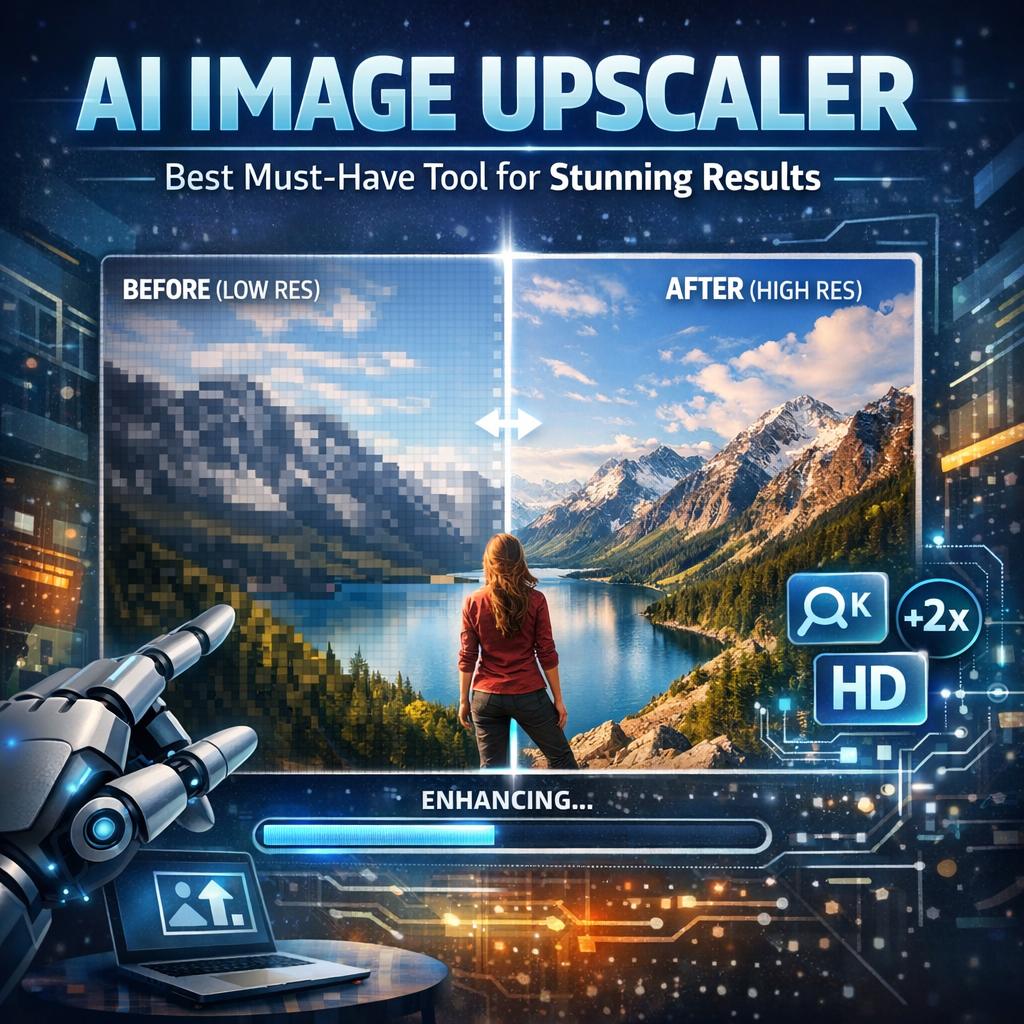
An AI Image Upscaler is a software tool that increases the resolution of an image while preserving or even improving its visual quality. Traditional resizing methods often create soft edges, artifacts, and loss of detail. AI upscaling works differently. It uses machine learning models trained on huge datasets of images to understand textures, lines, facial features, and patterns.
When you upload a low-resolution image, the AI does more than enlarge it. It attempts to reconstruct the finer details that would normally be lost. This can result in clearer portraits, smoother edges, sharper text elements, and more natural-looking enhancements.
These tools are commonly used for:
– Restoring old photos
– Improving e-commerce product images
– Enhancing social media visuals
– Enlarging digital art and illustrations
– Preparing images for print
– Refining website graphics
Why It Stands Out from Traditional Image Resizing
Standard image editing software can increase image dimensions, but it usually cannot create realistic detail. The result is often a larger version of the same poor-quality file. AI changes that process by making intelligent predictions based on learned visual patterns.
Here are a few reasons this technology stands out:
1. Better Detail Recovery
AI can sharpen edges, define textures, and improve facial features in ways normal resizing tools cannot.
2. Reduced Blur and Pixelation
Low-quality images often become blocky when enlarged. AI helps smooth those issues while maintaining a more realistic appearance.
3. Faster Workflow
Instead of manually retouching every image, users can upscale and enhance files in minutes.
4. Professional-Looking Results
Even users without advanced editing skills can produce cleaner, sharper visuals suitable for business or creative projects.
Key Benefits of Using an AI Image Upscaler
There are many reasons this tool has become essential across industries. Its benefits go far beyond simple enlargement.
Improved Visual Quality
A sharper image immediately looks more polished and trustworthy. This is especially important for online stores, portfolios, marketing campaigns, and brand materials.
Time and Cost Savings
Hiring a professional editor for every image can be expensive. AI tools automate much of the enhancement process, making high-quality visuals more accessible.
Better Performance Across Platforms
From websites to social media to print materials, image quality affects how your content is received. Upscaled images often appear more attractive and engaging, which can help increase clicks, shares, and conversions.
Easier Restoration of Old Images
Vintage photos and scanned memories often suffer from low resolution or damage. AI can help restore clarity and make those images more usable for albums, reprints, or digital preservation.
Best Use Cases for an AI Image Upscaler
Different users can benefit from this technology in different ways. Here are some of the most common and practical use cases.
AI Image Upscaler for E-Commerce and Marketing
Product images are often the first thing customers notice. If they are blurry or too small, potential buyers may lose confidence in the product. Upscaling helps sellers create cleaner product photos for listings, ads, and promotional graphics.
Marketers also use enhanced visuals for:
– Banner ads
– Blog featured images
– Social media campaigns
– Email graphics
– Presentation materials
Stronger visuals often lead to better audience engagement and a more professional brand image.
AI Image Upscaler for Photography and Personal Use
Photographers can use AI tools to improve older shots, rescue cropped images, or prepare files for larger displays and prints. For personal users, it is a great way to upgrade family photos, travel pictures, or portraits captured on older devices.
This can be especially useful when:
– You want to print a photo in a larger size
– An old image needs more clarity
– A social media post requires better sharpness
– A treasured photo exists only in a small digital version
What to Look for in the Right Tool
Not all upscaling tools perform equally well. Some are better for portraits, while others handle artwork, product photography, or landscape images more effectively. Choosing the right option depends on your needs.
Here are important features to consider:
Ease of Use
A good tool should have a simple upload process, clear controls, and quick output options.
Quality of Enhancement
Look for realistic sharpening rather than overprocessed results. Good AI should improve detail without making the image look artificial.
Batch Processing
If you work with many files, batch upscaling can save a huge amount of time.
File Format Support
Make sure the tool supports common image types such as JPG, PNG, and possibly WebP or TIFF.
Noise Reduction and Face Enhancement
Some tools include extra features like denoising, color correction, and portrait refinement, which can be very useful.
Output Size Options
Choose a platform that allows multiple scaling levels, such as 2x, 4x, or custom dimensions.
Tips for Getting the Best Results
Even the smartest AI tools work better with the right input and settings. To get the most from image upscaling, keep these tips in mind:
– Start with the highest quality source image available
– Choose the right enhancement mode for portraits, graphics, or photos
– Avoid excessive upscaling if the original file is extremely poor
– Review the result closely for unnatural textures or oversharpening
– Combine upscaling with light manual editing if needed
In many cases, the best result comes from balancing AI enhancement with a little human judgment.
Are There Any Limitations?
While AI upscaling is powerful, it is not magic. If an image is heavily damaged, extremely compressed, or missing too much information, the result may still be limited. AI can estimate and rebuild detail, but it cannot perfectly recover data that never existed.
Some tools may also produce images that look too smooth or slightly artificial, especially when aggressive settings are used. That is why testing different tools and settings is worth the effort.
Still, for most everyday and professional uses, the improvements are often significant enough to make the tool incredibly valuable.
Final Thoughts
High-quality visuals are no longer optional in today’s digital environment. From product listings and branding materials to personal photo restoration, better image clarity can make a noticeable difference. AI-powered upscaling offers a simple and effective way to transform small, blurry, or outdated images into cleaner and more useful visuals.
For anyone who regularly works with pictures, this tool is more than just a convenience. It is a smart upgrade that improves presentation, saves time, and helps every image make a stronger impression.