
AI Image Enhancer: Best Stunning Results in Seconds
AI image enhancer tools have changed the way people edit photos, making it possible to sharpen, brighten, restore, and upscale images in just a few clicks. What once required advanced software skills and hours of manual adjustments can now be done in seconds. Whether you are improving old family photos, preparing product images for an online store, or polishing social media content, these tools offer a fast and practical solution.
The growing demand for high-quality visuals has made smart editing technology more important than ever. Businesses need clean product images, creators want eye-catching thumbnails, and everyday users simply want their photos to look better. With artificial intelligence, image enhancement has become more accessible, accurate, and efficient.
What Is an AI Image Enhancer?
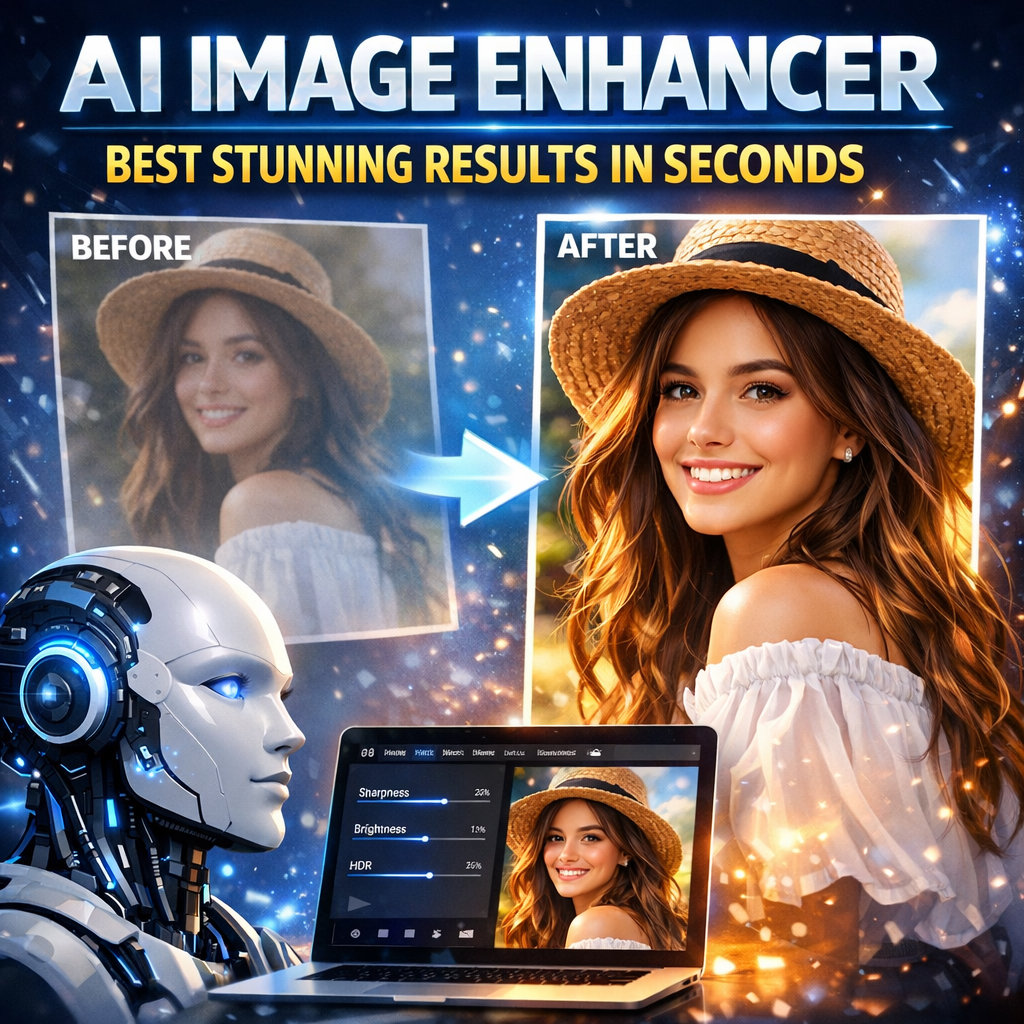
An AI image enhancer is a tool that uses machine learning and computer vision to automatically improve the quality of an image. Instead of relying only on preset filters, it analyzes the photo and identifies areas that need correction. This may include:
– Increasing sharpness
– Reducing noise and blur
– Correcting lighting
– Enhancing colors
– Upscaling image resolution
– Restoring facial details
– Removing artifacts from compressed files
These tools are designed to recognize patterns in images and apply adjustments that look natural. The result is often cleaner and more professional than basic one-click edits from standard photo apps.
How AI Image Enhancer Tools Work
Behind the simple user experience, these tools rely on trained algorithms that have studied millions of images. By learning what high-quality photos typically look like, the AI can predict how to improve lower-quality versions.
For example, if an image is blurry or too small, the system estimates missing detail and reconstructs it intelligently. If a photo is too dark, it can balance brightness and contrast without washing out the colors. Some advanced platforms even detect faces, skies, backgrounds, and objects separately, applying improvements to each area for better overall results.
This selective approach is one reason AI-based editing feels more precise than traditional automatic enhancement.
Why People Love Instant Photo Enhancement
Speed is one of the biggest reasons these tools are so popular. Not everyone has time to learn professional editing software, and not every image needs a full manual retouch. AI makes the process faster without sacrificing too much quality.
Here are some major benefits:
1. Saves Time
A task that once took 20 to 30 minutes can often be finished in less than a minute. This is especially useful for marketers, photographers, and content creators working with large batches of images.
2. Easy for Beginners
You do not need technical knowledge to get impressive results. Most platforms use drag-and-drop interfaces and automatic settings, so anyone can enhance a photo quickly.
3. Improves Old or Low-Quality Photos
Many people use these tools to restore scanned pictures, improve mobile shots, or fix images downloaded in poor resolution. The technology can make a noticeable difference even with challenging files.
4. Supports Professional Workflows
Designers, ecommerce sellers, and agencies often use AI to speed up production. It can handle repetitive improvements while leaving final creative decisions to the user.
Best Features to Look for in an AI Image Enhancer
Not all tools offer the same quality or capabilities. If you want strong results, it helps to know which features matter most.
AI Image Enhancer for Upscaling
One of the most useful features is image upscaling. This allows you to increase the resolution of a photo without making it look pixelated. It is ideal for printing, website banners, product images, and older photos that need to be enlarged.
Noise Reduction
Photos taken in low light often come with grain and visual noise. A good enhancer should reduce that noise while keeping important details intact.
Face and Portrait Improvement
Some tools are particularly strong at enhancing facial features. They can sharpen eyes, smooth skin naturally, and recover detail in portraits without creating an artificial look.
Color and Light Correction
Balanced brightness, contrast, and saturation can turn a flat image into a vivid one. AI can make these changes in a more context-aware way than simple filters.
Batch Processing
For users working with many images at once, batch processing is a major advantage. It helps maintain consistency and saves significant time.
Common Use Cases for AI-Powered Enhancement
These tools are useful in a wide range of situations. Here are some of the most common:
– Ecommerce: Improve product photos to attract buyers and build trust.
– Social media: Make posts, stories, and ads more visually engaging.
– Photography: Speed up editing for event, portrait, or real estate shoots.
– Graphic design: Prepare cleaner assets for presentations, campaigns, or websites.
– Personal use: Restore family photos, improve vacation pictures, or fix blurry snapshots.
– Content creation: Upgrade thumbnails, blog visuals, and video stills.
The versatility of AI makes it valuable for both professional and everyday needs.
How to Choose the Right AI Image Enhancer
With so many platforms available, choosing the right one depends on your goals. Some are better for portrait retouching, while others specialize in upscaling or restoring damaged images.
When comparing options, consider the following:
– Output quality: Look at before-and-after examples carefully.
– Ease of use: A clean interface matters if you want fast results.
– Processing speed: Some tools are much faster than others.
– Customization: Automatic editing is helpful, but manual controls can improve precision.
– Supported file types: Make sure the tool works with your images.
– Pricing: Free tools are useful for basic needs, but premium versions often offer better resolution and more advanced features.
If possible, test a few tools with the same image. This gives you a better sense of which one delivers the most natural and useful result.
Tips for Getting Better Results
Even the smartest tool works best when the original image is reasonably usable. To get the most out of the process, keep these tips in mind:
1. Start with the highest-quality original file available.
2. Avoid applying too many effects after enhancement.
3. Use portrait-specific modes for faces and people.
4. Compare the original and enhanced versions before exporting.
5. Do not over-sharpen, as it can make the image look unnatural.
AI can improve a lot, but realistic expectations are important. A severely damaged image may look better, but it may not become perfect.
The Future of AI Image Enhancer Technology
As AI continues to evolve, image enhancement is becoming more advanced and personalized. New tools are starting to understand scene depth, textures, artistic style, and even user preferences. This means future improvements may be even more accurate, subtle, and tailored to specific industries.
We are also seeing closer integration with design software, mobile apps, and content platforms. That will make enhancement an even more seamless part of everyday creative work.
Final Thoughts
Smart photo enhancement has made high-quality editing faster and easier than ever. For individuals, it removes the technical barrier to better-looking pictures. For businesses and creators, it offers a practical way to save time while maintaining visual quality.
Whether you need to rescue an old memory, polish a product photo, or prepare content for a campaign, an AI-powered solution can deliver impressive improvements in seconds. The key is choosing a reliable tool, using it with intention, and knowing when automation is enough—and when a human touch still matters.