
How Smart Teams Use AI to Drive Easier, Faster Growth
AI for Marketing is no longer a futuristic idea reserved for large enterprises with massive budgets. It has become a practical, everyday advantage for brands that want to work smarter, connect with customers more effectively, and grow without adding unnecessary complexity. From content creation and audience targeting to performance analysis and personalization, AI gives marketers the ability to make better decisions faster.
What makes AI especially powerful is not just automation. It is the combination of speed, insight, and scalability. Instead of spending hours sorting through data, testing messages manually, or building campaigns based on guesswork, teams can use AI to identify patterns, predict outcomes, and optimize in real time. The result is more efficient marketing and more consistent growth.
Why AI Has Become Essential for Modern Marketing
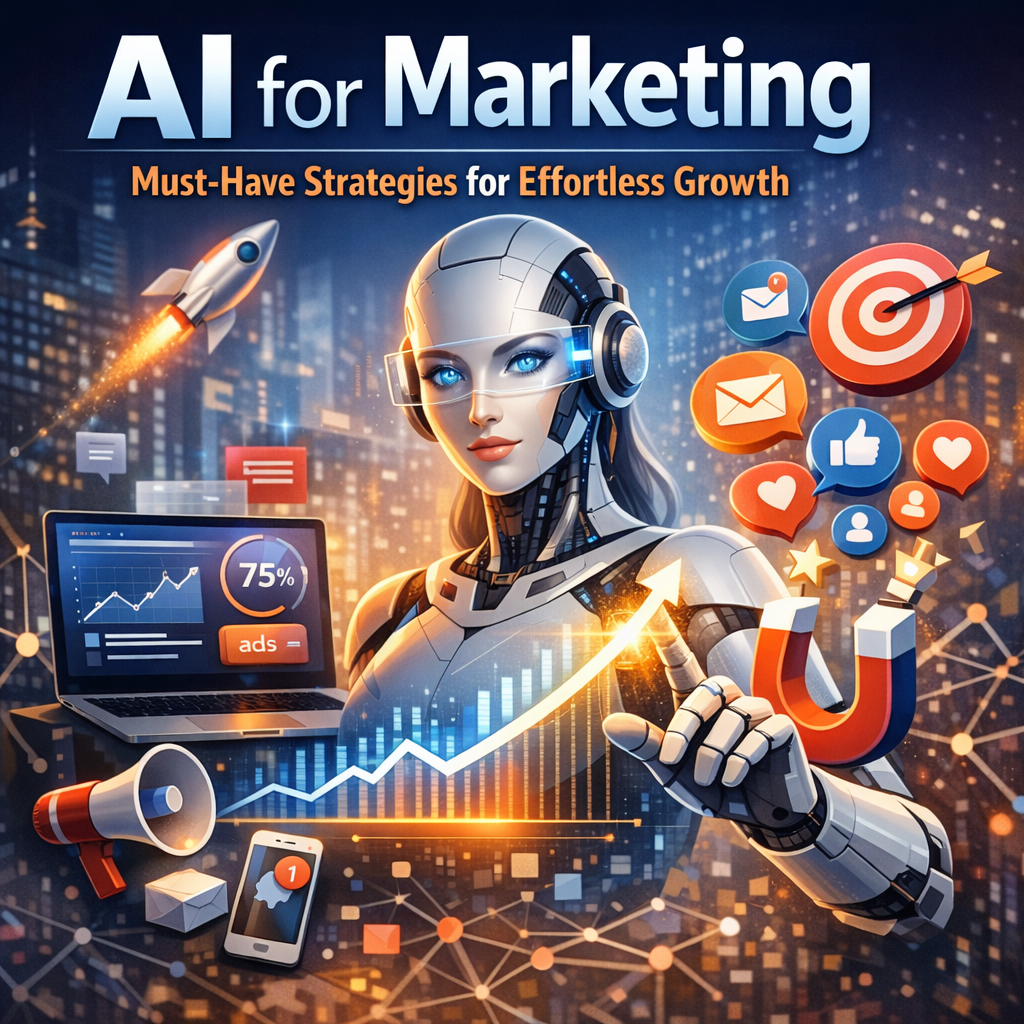
Marketing has changed dramatically in recent years. Consumers expect personalized experiences, quick responses, and relevant content across every channel. At the same time, marketers are expected to do more with less: less time, fewer resources, and tighter budgets.
This is where AI delivers real value. It helps businesses:
– Analyze large volumes of customer data quickly
– Personalize messaging at scale
– Automate repetitive tasks
– Improve campaign performance through predictive insights
– Create more targeted and timely customer experiences
Rather than replacing marketers, AI supports them. It frees teams from repetitive work so they can focus on strategy, creativity, and relationship-building.
AI for Marketing: Core Strategies That Actually Work
Not every AI tool or tactic will create meaningful results. The most effective approach is to focus on strategies that directly improve efficiency, decision-making, and customer engagement.
1. Use AI for Smarter Audience Segmentation
One of the biggest challenges in marketing is understanding who your audience really is. Traditional segmentation often relies on broad categories such as age, location, or job title. AI takes this further by identifying behavior-based patterns that humans might miss.
With AI-powered segmentation, you can group users based on:
– Purchase behavior
– Website activity
– Email engagement
– Interests and preferences
– Likelihood to convert or churn
This allows you to create more relevant campaigns for each audience segment. Better targeting leads to stronger engagement, higher conversions, and less wasted ad spend.
2. Personalize Content at Scale
Consumers are more likely to respond to brands that feel relevant to their needs. However, creating personalized experiences manually for thousands of users is nearly impossible. AI makes it achievable.
AI can help personalize:
– Email subject lines and body copy
– Product recommendations
– Website experiences
– Ad creatives
– Content suggestions
For example, an e-commerce brand can use AI to show different homepage banners based on browsing history, while a B2B company can tailor email sequences based on where a lead is in the sales funnel. This level of personalization improves the customer experience and increases the chances of conversion.
3. Automate Repetitive Marketing Tasks
Many marketing tasks are necessary but time-consuming. Scheduling social posts, sending follow-up emails, managing lead scoring, and pulling reports can consume hours every week. AI-powered automation helps reduce this burden.
Useful areas to automate include:
– Email workflows
– Chatbot responses
– Lead nurturing sequences
– Social media scheduling
– Campaign reporting
– Data cleanup and tagging
Automation does not mean removing the human touch. It means using technology to handle routine tasks while your team focuses on high-impact work.
Improve Decision-Making With Predictive Analytics
One of the most valuable uses of AI in marketing is predictive analytics. Instead of only looking at what happened in the past, AI can help estimate what is likely to happen next.
This can be used to predict:
– Which leads are most likely to convert
– Which customers may stop buying
– What content will perform best
– Which channels deserve more budget
– When users are most likely to engage
These insights help marketers make proactive decisions rather than reactive ones. For example, if AI shows that a certain customer segment is at risk of churning, you can launch a retention campaign before the relationship weakens further.
Predictive analytics also improves budget allocation. Rather than spreading resources evenly across all channels, you can invest more confidently in the tactics most likely to generate results.
Strengthen Content Creation Without Losing Authenticity
Content remains one of the strongest tools in any marketing strategy, but creating it consistently can be difficult. AI can support content teams by speeding up research, idea generation, optimization, and repurposing.
AI can assist with:
– Blog topic generation
– SEO recommendations
– Ad copy variations
– Email draft creation
– Social media captions
– Content summaries and rewrites
The key is to use AI as a creative partner, not a complete replacement. Human oversight is still essential for maintaining brand voice, accuracy, and originality. The best results come when marketers combine AI efficiency with human judgment and storytelling.
Use AI to Optimize Campaign Performance in Real Time
Traditional campaign analysis often happens after the campaign ends. By then, the budget has already been spent and the opportunity to improve is gone. AI changes this by making real-time optimization possible.
With AI tools, marketers can monitor performance continuously and adjust:
– Ad bidding strategies
– Audience targeting
– Creative variations
– Send times
– Budget distribution
This creates a more agile marketing system. Instead of waiting for a monthly report, teams can respond quickly to what the data is showing now. That means less waste and better results.
Best Practices for Adopting AI Successfully
AI can deliver impressive outcomes, but only when implemented thoughtfully. To get the most from it, keep these best practices in mind:
Start With a Specific Problem
Do not adopt AI just because it is trending. Identify a real challenge first, such as low email engagement, inefficient reporting, or weak lead quality.
Choose Tools That Fit Your Workflow
The best AI platform is not always the most advanced one. It is the one your team can use effectively and integrate into existing systems.
Protect Data Quality
AI depends on good data. Inaccurate, outdated, or incomplete information will lead to poor recommendations and weaker results.
Keep Human Oversight in Place
AI should support decision-making, not replace accountability. Review outputs carefully, especially for customer-facing content and strategy decisions.
Measure What Matters
Track results such as conversion rates, cost per acquisition, engagement, and customer retention to understand whether your AI efforts are truly improving performance.
The Future Belongs to Marketers Who Adapt
AI is not a shortcut to effortless success, but it is a powerful tool for removing friction from the growth process. It helps marketers move faster, personalize better, and act on insights with more confidence. Businesses that embrace it early and strategically will be better positioned to compete in a crowded digital landscape.
The most effective approach is simple: start small, solve real problems, and build from there. Whether you are a solo marketer, a growing startup, or an established brand, AI can help create a more efficient and scalable marketing engine. In a world where attention is limited and competition is constant, that advantage matters more than ever.