
AI Customer Insights Tools: Must-Have Solutions for Better Growth
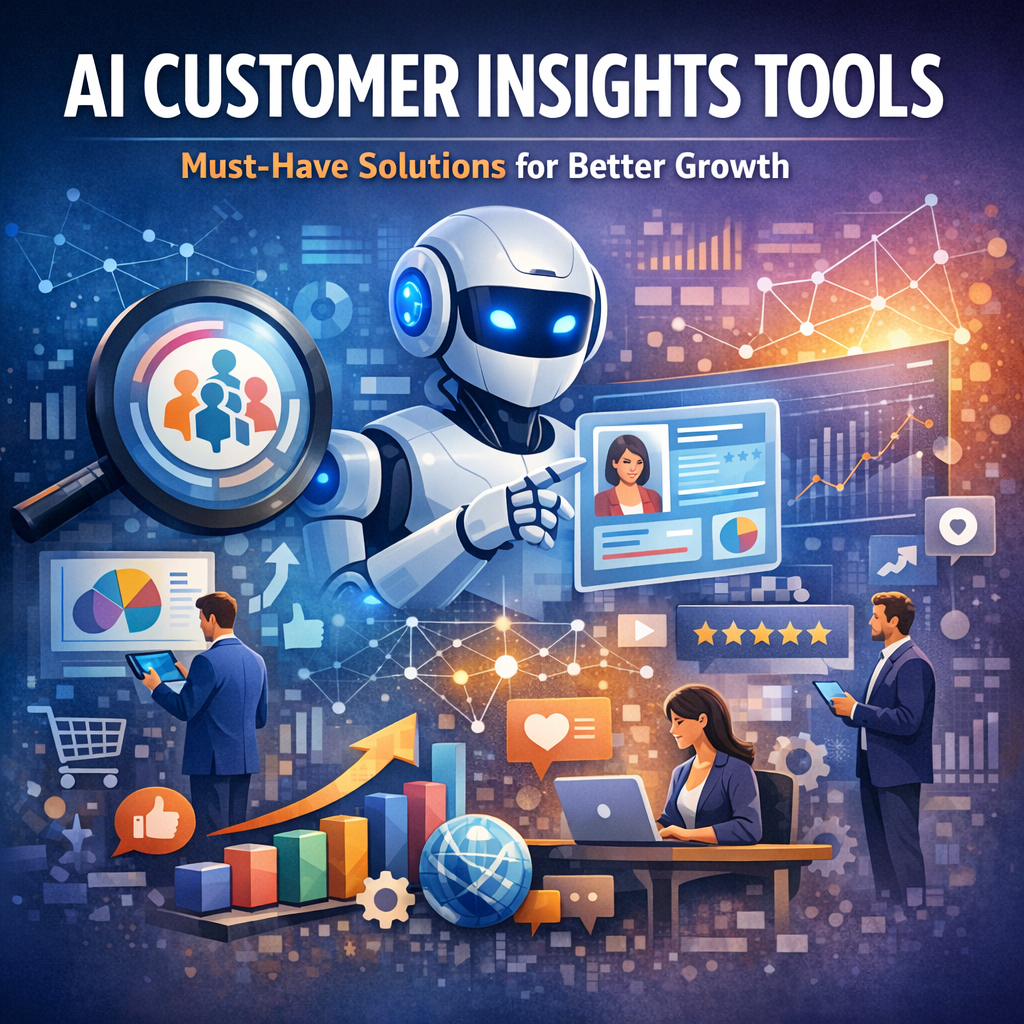
AI Customer Insights Tools are changing the way businesses understand, reach, and retain their audiences. Instead of relying on guesswork or outdated reports, companies can now use intelligent platforms to analyze customer behavior, identify patterns, and make better decisions faster. In a market where customer expectations shift quickly, these tools help brands stay relevant, personal, and competitive.
Why customer insight matters more than ever
Business growth depends on understanding what customers want, why they buy, and what causes them to leave. Traditional research methods like surveys, focus groups, and manual data reviews still have value, but they often take too much time and may miss real-time behavioral signals.
Modern businesses interact with customers across many channels: websites, apps, email, social media, live chat, support tickets, and marketplaces. Each interaction creates useful data, but the challenge lies in turning that data into action. That is where AI steps in.
AI-powered insight tools can process massive amounts of structured and unstructured data in seconds. They can detect trends, predict future behavior, and uncover patterns that human teams may overlook. This gives businesses a clearer view of customer needs and helps improve everything from marketing to product development.
What are AI Customer Insights Tools?
AI Customer Insights Tools are software solutions that use artificial intelligence, machine learning, natural language processing, and predictive analytics to gather and interpret customer data. Their main purpose is to help businesses understand customers at a deeper level and act on that understanding.
These tools often pull data from multiple sources and combine it into a single view. They can then analyze customer journeys, segment audiences, identify buying signals, track sentiment, and forecast churn or lifetime value.
In simple terms, they do more than report what happened. They help explain why it happened and what is likely to happen next.
Core benefits of using AI-powered customer insight solutions
1. Better customer segmentation
Not all customers behave the same way. AI can group people based on behavior, interests, purchase patterns, engagement level, and intent. This allows businesses to move beyond broad demographic targeting and create highly relevant campaigns.
For example, instead of marketing to all first-time buyers the same way, a business can identify which users are likely to become repeat customers and which need extra nurturing.
2. More personalized experiences
Customers expect brands to understand their preferences. AI tools help deliver personalized recommendations, content, product suggestions, and messaging based on actual data rather than assumptions.
This level of personalization improves engagement and conversion rates while also making the customer experience feel smoother and more valuable.
3. Faster decision-making
Manual analysis often creates delays. By the time teams review reports, the opportunity may already be gone. AI tools surface insights in real time or near real time, allowing businesses to act quickly.
This speed is especially important in areas like ecommerce, subscription services, and digital marketing, where customer behavior can shift from day to day.
4. Improved retention and reduced churn
Understanding why customers leave is just as important as knowing why they stay. AI tools can identify early warning signs of churn, such as declining engagement, support complaints, or lower purchase frequency.
With these signals, businesses can take proactive steps, such as offering support, adjusting messaging, or launching retention campaigns before the customer is lost.
5. Smarter product and service development
Customer insight is not only useful for sales and marketing. Product teams can use AI to detect recurring complaints, feature requests, and usage trends. This helps prioritize improvements that match real customer needs rather than internal assumptions.
Must-have features in AI Customer Insights Tools
Not all platforms offer the same value. When evaluating solutions, businesses should look for features that align with their growth goals.
Unified customer data
A strong tool should combine data from CRM platforms, websites, mobile apps, email tools, support systems, and social channels into one place.
Predictive analytics
The ability to forecast customer behavior, such as churn risk, next purchase likelihood, or lifetime value, is one of the biggest advantages of AI.
Sentiment analysis
This feature helps businesses understand how customers feel by analyzing reviews, chat conversations, support tickets, and social comments.
Real-time dashboards
Clear, live dashboards make it easier for teams to monitor trends, identify changes, and respond quickly.
Automated segmentation
AI should help create and update customer segments dynamically as new behaviors emerge.
Actionable recommendations
The best tools do not just present data. They suggest what teams should do next, whether that means adjusting campaigns, improving onboarding, or targeting a specific audience.
Best use cases across business functions
AI-driven customer insights can support growth in several areas of a business.
Marketing
Marketers can use AI to identify high-value audiences, personalize campaigns, optimize timing, and measure which messages work best. It also helps reduce wasted ad spend by focusing on likely converters.
Sales
Sales teams benefit from lead scoring, intent analysis, and deeper account intelligence. This allows them to prioritize outreach and tailor conversations more effectively.
Customer service
Support teams can use AI to spot common issues, predict dissatisfaction, and improve response strategies. Sentiment tracking can also help identify customers who need urgent attention.
Product management
By analyzing user behavior and feedback, product teams can learn which features are driving value and which friction points need attention.
Leadership and strategy
Executives can use AI-generated insight to make more informed decisions about customer acquisition, retention, pricing, and expansion opportunities.
Challenges to consider before adoption
While the benefits are significant, businesses should be realistic about implementation. AI insight tools work best when the underlying data is accurate and well-organized. Poor data quality can lead to misleading recommendations.
Privacy and compliance are also critical. Businesses must ensure that customer data is collected and used responsibly, especially in regulated industries or regions with strict data protection laws.
Another common challenge is adoption. A powerful tool only creates value if teams know how to use it. Training, clear workflows, and cross-functional alignment are essential.
How to choose the right solution
Choosing the right platform depends on business size, goals, and technical maturity. A startup may need a lightweight tool focused on website behavior and campaign performance, while an enterprise may require advanced analytics, integrations, and custom modeling.
When comparing options, consider:
– Ease of integration with current systems
– Scalability as the business grows
– Quality of reporting and dashboards
– AI capabilities beyond basic automation
– User experience for non-technical teams
– Vendor support and onboarding assistance
It is also helpful to define success metrics before implementation. For example, a business may want to reduce churn, improve campaign conversion, increase average order value, or shorten the sales cycle. Clear goals make it easier to measure impact.
The future of growth is insight-driven
Companies that grow consistently are usually the ones that listen closely to their customers and adapt quickly. AI gives businesses the ability to do that at scale. Instead of reacting too late, teams can anticipate needs, personalize experiences, and make smarter decisions backed by data.
As customer journeys become more complex, insight tools are no longer a luxury. They are a practical investment for businesses that want stronger retention, better targeting, and more confident growth.
Final thoughts
AI Customer Insights Tools give businesses a clearer understanding of the people they serve. They turn raw data into meaningful action, helping teams improve marketing, sales, product development, and customer retention. For brands that want sustainable growth, investing in these solutions is not just about technology. It is about building better customer relationships with greater precision and speed.