
AI Coding Interview Tools: Best Must-Have Solutions for Success
AI coding interview tools are quickly changing how candidates prepare for technical interviews and how companies assess talent. From live coding practice and real-time feedback to mock interviews and question generation, these tools can help developers prepare smarter, not just harder. Whether you are a student aiming for your first software role, an experienced engineer targeting a top tech company, or a hiring team looking to improve evaluation quality, the right solutions can make a major difference.
Why These Tools Matter More Than Ever
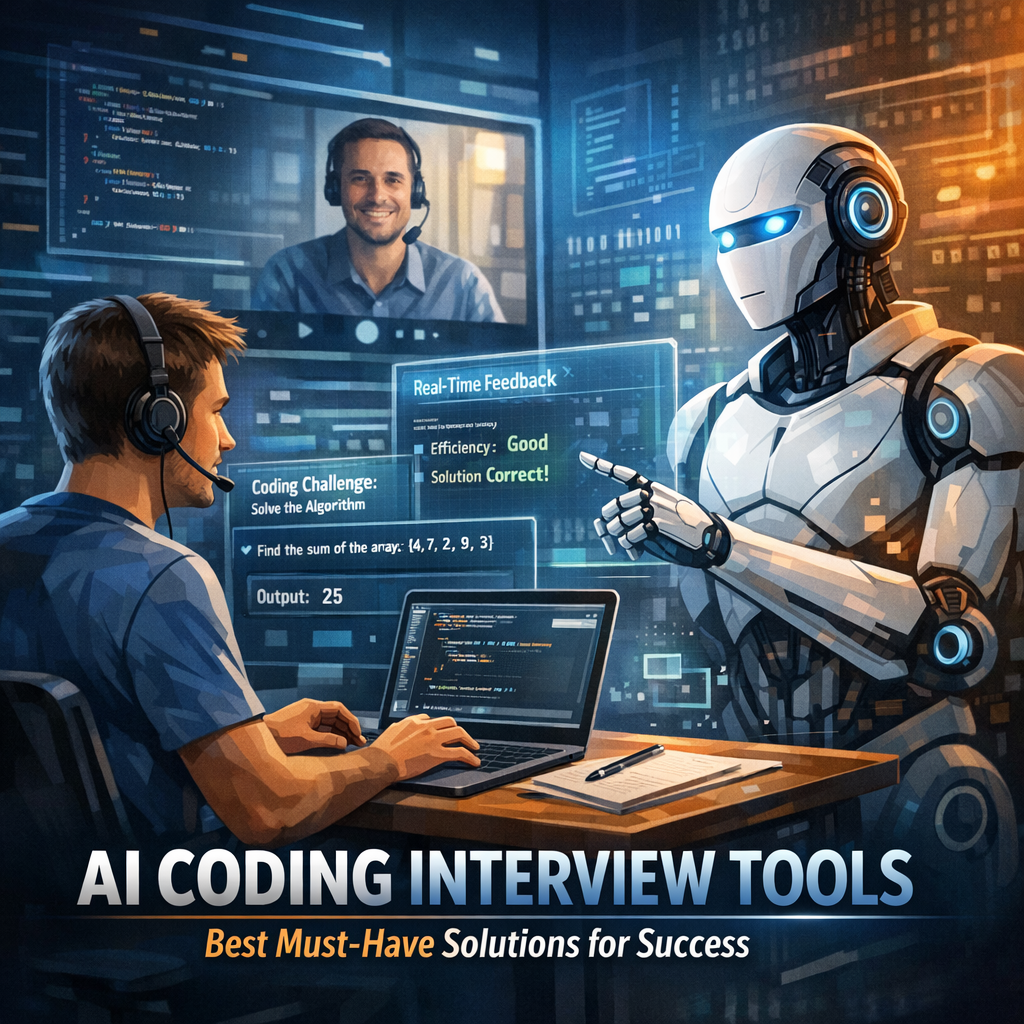
Technical interviews can be stressful. Candidates often need to solve problems under time pressure, explain their thought process clearly, write clean code, and sometimes optimize their solution on the spot. Traditional preparation methods such as textbooks, random coding websites, and peer practice still work, but they often lack personalization.
That is where AI-powered platforms stand out. They can analyze your coding patterns, identify weak areas, suggest tailored practice, simulate interview conditions, and even provide instant feedback on communication and problem-solving style. Instead of guessing what to study next, you get targeted recommendations based on actual performance.
For employers, these solutions also improve consistency. AI-assisted platforms can help standardize coding assessments, reduce manual review time, and surface deeper insights into a candidate’s technical ability.
What to Look for in AI Coding Interview Tools
Not every platform offers the same value. The best options usually combine several of the following features:
– Adaptive question recommendations based on your skill level
– Real-time coding feedback for syntax, logic, and efficiency
– Mock interview simulations with timed challenges
– Behavioral and communication analysis for interview delivery
– Multi-language support for languages like Python, Java, JavaScript, C++, and Go
– Company-specific preparation paths for FAANG or startup interviews
– Detailed performance analytics to track progress
– Collaborative or live interview modes for realistic practice
A good tool should not just test you. It should teach, guide, and help you improve over time.
Best Categories of AI Coding Interview Tools
There is no single perfect platform for everyone. The right choice depends on your goal.
1. Coding Practice Platforms With AI Feedback
These tools focus on algorithmic problem-solving and coding challenges. Their main strength is helping candidates get better at solving technical questions efficiently.
Best for:
– Data structures and algorithms practice
– Timed coding rounds
– Pattern recognition across common interview questions
Look for features such as:
– Difficulty progression
– Personalized learning paths
– AI explanations for mistakes
– Suggested alternate solutions
These platforms are especially useful if you struggle with consistency and need a structured path.
2. Mock Interview Assistants
Mock interview tools simulate real technical interview scenarios. Some offer AI interviewers that ask questions, assess responses, and provide instant feedback.
Best for:
– Practicing under pressure
– Improving verbal explanation
– Building confidence for live interviews
What makes these valuable is realism. It is one thing to solve a problem alone. It is another to solve it while speaking clearly and responding to follow-up questions. AI mock interview assistants help bridge that gap.
3. Resume-to-Interview Preparation Tools
Some AI platforms analyze your resume, target role, and experience level to create a customized interview preparation plan.
Best for:
– Job seekers applying to specific companies
– Developers changing domains
– Candidates with limited study time
These tools can identify likely question areas, recommend key concepts, and align your practice with the roles you actually want.
4. Employer-Focused Assessment Platforms
For companies, AI can support better interview workflows by generating coding tests, scoring submissions, and flagging patterns in candidate performance.
Best for:
– Recruitment teams
– Startups scaling hiring
– Organizations that want faster, more consistent evaluations
These systems should be used carefully and ethically, but when designed well, they reduce administrative burden and improve the candidate experience.
How AI Coding Interview Tools Improve Candidate Performance
AI Coding Interview Tools Help Identify Weak Spots Fast
One of the biggest advantages is rapid diagnosis. Maybe you are strong in arrays and strings but weak in dynamic programming. Maybe your solution works but is not optimal. Maybe your biggest issue is not coding at all, but explaining your reasoning.
AI systems can detect these patterns after just a few sessions. That helps you spend less time on generic study and more time on focused improvement.
AI Coding Interview Tools Make Practice More Realistic
Many candidates prepare by solving problems casually, without deadlines or live explanation. Then the real interview feels completely different. AI-based mock sessions introduce time pressure, verbal prompts, and follow-up questions that resemble actual interviews more closely.
This realistic practice can reduce anxiety and improve performance when it matters most.
AI Coding Interview Tools Offer Instant, Actionable Feedback
Human mentors are valuable, but they are not always available. AI tools can review code immediately, point out inefficiencies, suggest cleaner logic, and even explain why a certain approach is stronger.
That kind of immediate feedback shortens the learning loop. You make a mistake, understand it, and correct it right away.
Must-Have Solutions and Features for Success
If you are building your interview prep stack, prioritize these solutions:
Personalized Learning Engine
Choose a platform that adapts to your performance instead of giving random problems. Smart recommendations save time and increase progress.
Live Coding Environment
Use tools that simulate real interview editors. Features like test cases, constraints, and collaborative coding windows help you practice in the right format.
AI Mock Interviewing
A mock interviewer that asks technical and behavioral questions can sharpen both problem-solving and communication.
Explanation and Optimization Support
The best tools do not stop at “correct” or “incorrect.” They explain complexity, trade-offs, and better ways to structure code.
Progress Tracking
Dashboards showing strengths, weaknesses, speed, and accuracy help you stay accountable and prepare strategically.
Tips for Using These Tools Effectively
Even the best platform will not help much without a smart approach. Here are a few ways to get better results:
1. Practice consistently instead of cramming once a week.
2. Review mistakes deeply rather than just checking the right answer.
3. Say your thoughts out loud during mock sessions.
4. Mix question types across easy, medium, and hard levels.
5. Focus on fundamentals like arrays, trees, graphs, recursion, and system thinking.
6. Use analytics to guide what you study next.
7. Combine AI with human feedback when possible for a more complete prep experience.
Potential Limitations to Keep in Mind
AI tools are powerful, but they are not perfect. Some may overemphasize patterns and underprepare you for unusual questions. Others may give feedback that is technically correct but too generic. There is also the risk of becoming dependent on hints instead of developing your own problem-solving process.
That is why balance matters. Use AI for structure, speed, and feedback, but also practice independently and with real people.
Final Thoughts
AI has become a practical advantage in technical interview preparation. The strongest platforms go beyond simple coding drills and provide adaptive learning, realistic simulations, and detailed guidance that helps candidates improve faster. For employers, these solutions can also make assessments more scalable and consistent.
If you want better interview outcomes, the smartest move is to choose tools that match your goals, focus on weak areas, and create a realistic practice routine. With the right mix of preparation, feedback, and repetition, you can walk into your next coding interview more confident, more prepared, and far more likely to succeed.