
AI Coding Assistant: Must-Have Tool for Effortless Development
AI Coding Assistant technology is changing the way developers write, review, and improve software. What once required constant context switching, manual debugging, and hours of documentation lookup can now be streamlined with intelligent suggestions, automated code generation, and real-time support. For beginners, it lowers the barrier to entry. For experienced engineers, it speeds up repetitive work and helps maintain momentum during complex projects.
Modern software development is no longer just about writing lines of code as quickly as possible. It is about building reliable systems, collaborating effectively, and shipping features with confidence. That is exactly why AI-powered coding tools have become so valuable. They act like a smart development partner—one that can assist with syntax, logic, testing ideas, refactoring, and even explaining unfamiliar code.
Why an AI Coding Assistant Matters
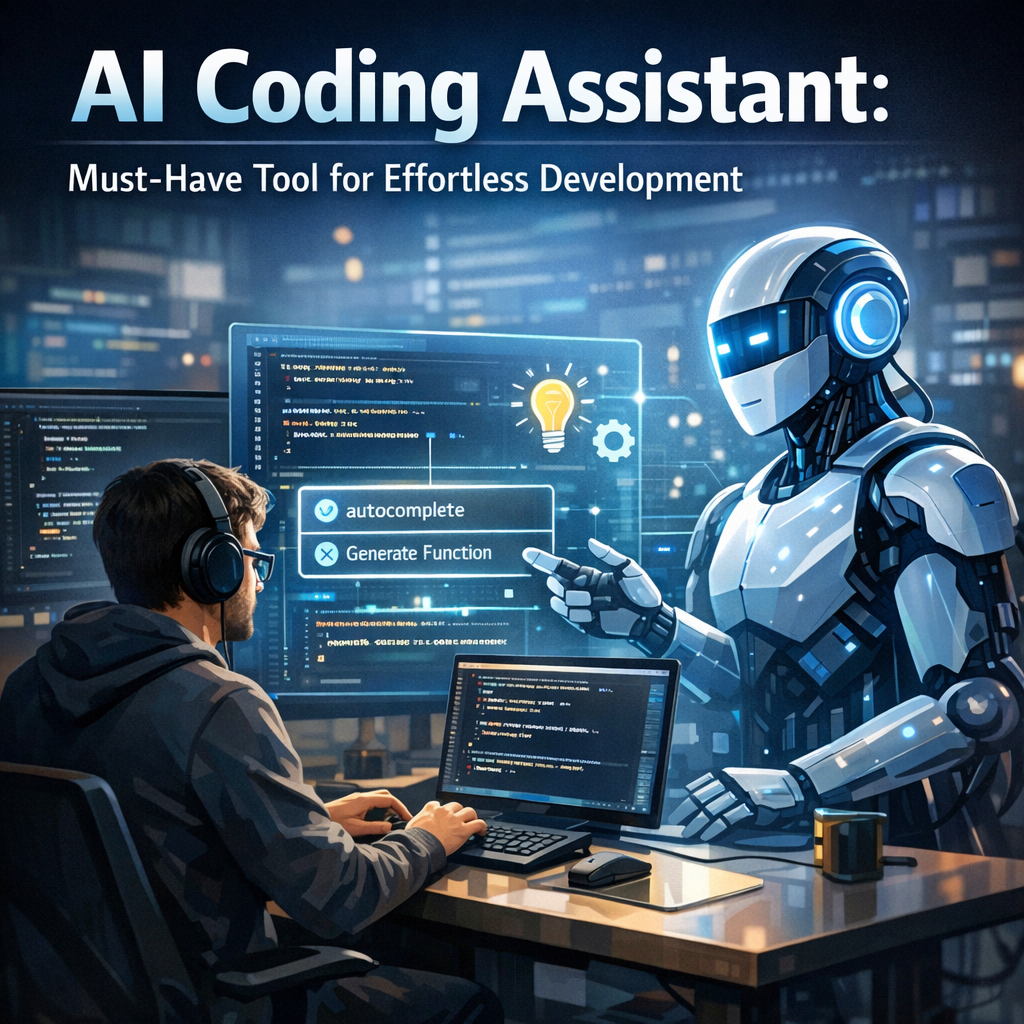
Development often involves much more than coding from scratch. A large portion of a programmer’s day goes into reading existing code, troubleshooting errors, searching for best practices, writing boilerplate, and translating ideas into workable logic. These tasks are necessary, but they can interrupt creative flow.
An AI coding assistant helps reduce that friction by offering support at the moment it is needed. Instead of leaving the editor to search forums or documentation, developers can get suggestions directly in their workflow. This can save time, reduce mental load, and improve productivity.
Some of the most common advantages include:
– Faster code completion
– Reduced repetitive typing
– Easier debugging support
– Better onboarding for new developers
– Quick explanations of unfamiliar functions or patterns
– Assistance with documentation and test generation
These benefits add up quickly, especially in fast-moving teams where deadlines, code quality, and efficiency all matter.
How an AI Coding Assistant Improves Daily Workflow
The biggest strength of an AI coding assistant is how naturally it fits into everyday development work. Rather than replacing the developer, it enhances decision-making and speeds up routine tasks.
1. Faster Code Generation
Many applications require repetitive code structures, such as API routes, form validation, database queries, and model definitions. AI tools can generate these patterns quickly, giving developers a strong starting point. This is particularly useful for boilerplate-heavy frameworks and common architecture patterns.
Instead of spending 20 minutes setting up a standard component, a developer can generate a draft in seconds and then customize it.
2. Smarter Debugging Support
Finding bugs is often harder than writing the original code. AI tools can identify likely issues, explain error messages, and suggest fixes based on context. While they are not always perfect, they can dramatically shorten the time spent staring at stack traces or searching for common mistakes.
This is especially useful when:
– A syntax error is hidden in a large file
– A function behaves unexpectedly
– A library integration fails
– A refactor introduces side effects
3. Better Code Understanding
Developers frequently work with legacy systems, team-written modules, or open-source libraries they did not create. AI can help explain what a block of code does, summarize a file, or clarify why a pattern may have been used. This reduces onboarding time and makes large codebases less intimidating.
4. Improved Focus
Constantly jumping between the editor, browser tabs, docs, and issue trackers can break concentration. AI assistance keeps more of the problem-solving process inside the development environment. That means fewer interruptions and more time spent in a productive flow state.
Key Features to Look For
Not all tools are built the same. The best AI coding assistant for one team may not be the best fit for another. When evaluating options, several features stand out.
Context-Aware Suggestions
A useful assistant should understand the current file, function, and project structure. Generic suggestions are less helpful than recommendations tailored to the actual codebase.
Multi-Language Support
Many developers work across several languages and frameworks. A tool that supports JavaScript, Python, TypeScript, Java, Go, SQL, and more can add value across a full stack.
Refactoring Help
Beyond generating new code, strong tools can improve existing code by simplifying logic, renaming variables, breaking up large functions, and suggesting cleaner patterns.
Test and Documentation Assistance
Writing tests and documentation is essential but often delayed. AI can generate starting points for unit tests, comments, and usage docs, making it easier for teams to maintain code quality.
Security Awareness
An assistant should help avoid insecure patterns rather than introduce them. Security-conscious suggestions are particularly important in authentication, data handling, and API design.
Benefits for Beginners and Experienced Developers
One reason these tools are gaining traction so quickly is that they serve multiple skill levels.
For beginners, an AI coding assistant can:
– Explain syntax and logic in simple language
– Offer examples for common programming tasks
– Reduce frustration during the learning process
– Encourage experimentation with immediate feedback
For experienced developers, it can:
– Speed up repetitive tasks
– Support architecture experimentation
– Help review and improve code quality
– Accelerate prototyping and feature delivery
In both cases, the tool works best as an assistant rather than an authority. Human judgment remains essential, especially when it comes to performance, security, scalability, and business logic.
Limitations to Keep in Mind
Despite their advantages, AI coding tools are not flawless. They can produce code that looks correct but contains subtle bugs, outdated patterns, or weak security assumptions. They may also misunderstand context or generate overly complicated solutions.
That is why developers should always:
– Review generated code carefully
– Test outputs before shipping
– Verify framework-specific recommendations
– Avoid blindly accepting suggestions
– Protect sensitive code and data when using external platforms
The best results come from combining AI speed with human oversight.
Best Practices for Using AI in Development
To get the most value from an AI coding assistant, it helps to use it intentionally.
Here are a few smart habits:
1. Use clear prompts: The more specific the request, the better the result.
2. Ask for explanations: Understanding generated code prevents dependency on the tool.
3. Iterate in small steps: Refine outputs rather than expecting perfection in one attempt.
4. Validate everything: Run tests, perform reviews, and check edge cases.
5. Use it for acceleration, not replacement: Keep decision-making in human hands.
When used this way, AI becomes a productivity multiplier rather than a shortcut that creates technical debt.
The Future of Development with AI
Software creation is becoming more collaborative, and AI is now part of that collaboration. As these tools continue to improve, they will likely become even better at understanding project context, enforcing coding standards, and helping teams move from idea to deployment faster.
This does not mean coding expertise will become less important. In fact, strong developers may benefit the most because they know how to guide the tool, evaluate outputs, and integrate suggestions into well-designed systems.
The real value lies in freeing developers from low-value repetition so they can spend more time on architecture, problem-solving, product thinking, and innovation.
Final Thoughts
An AI coding assistant is no longer a novelty—it is quickly becoming a practical part of modern development. Whether you are learning your first programming language or managing production-level systems, the right tool can reduce friction, speed up workflows, and make daily coding more efficient.
The key is to use it wisely. Treat it as a capable helper, not a substitute for engineering judgment. When paired with thoughtful review and strong development practices, it can make software creation feel faster, smoother, and far less exhausting.