
AI Brand Monitoring Tools: Best Must-Have Solutions for 2026
AI brand monitoring tools are now essential for businesses that want to protect their reputation, understand customer sentiment, and respond to market changes in real time. In 2026, brand perception moves faster than ever across social media, review platforms, forums, news sites, video content, and AI-generated summaries. Companies that rely on manual tracking simply cannot keep up. The brands that stay ahead are using intelligent platforms that detect trends early, surface reputation risks, and turn public feedback into actionable strategy.
Why brand monitoring matters more in 2026
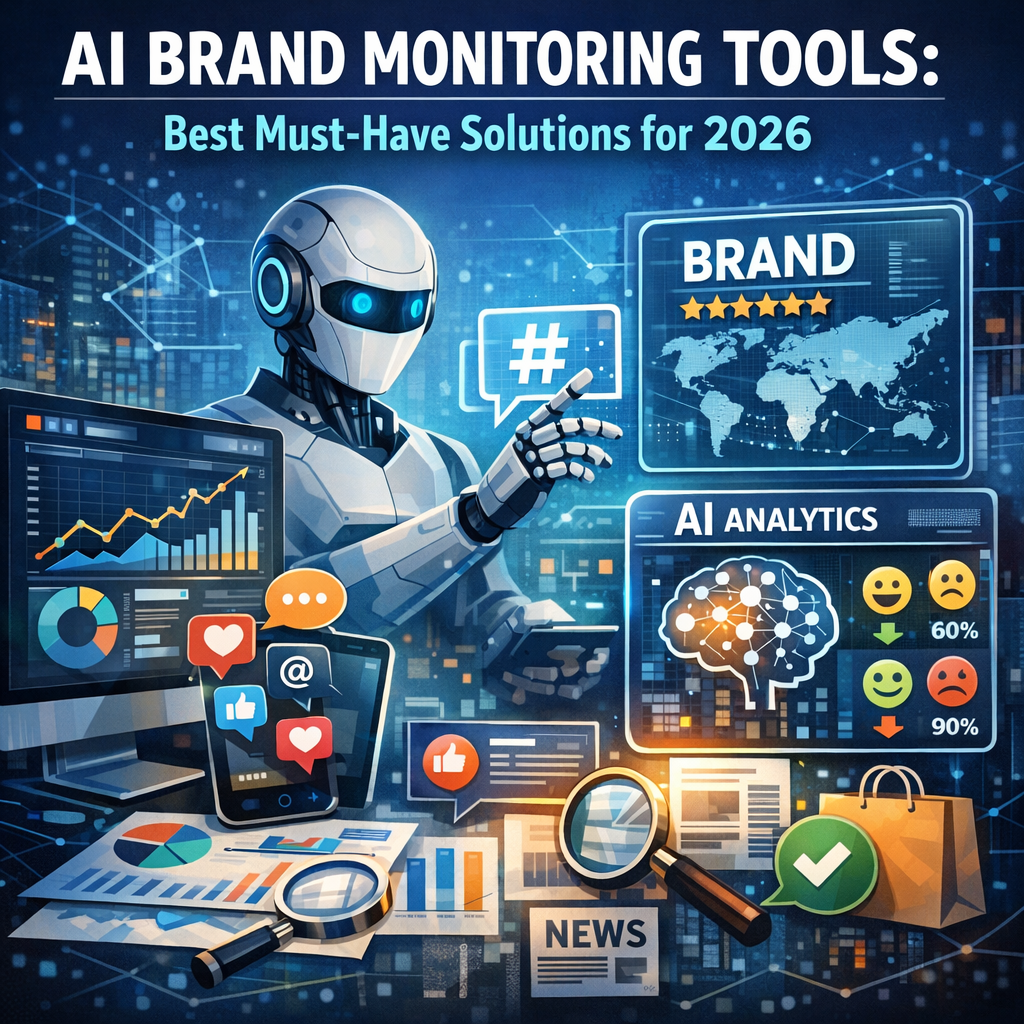
A brand is no longer shaped only by advertising or official messaging. It is built every day through customer reviews, influencer opinions, employee posts, media coverage, and online conversations. One viral complaint, misleading story, or emerging competitor trend can shift perception quickly.
Modern monitoring is about much more than counting mentions. Businesses now need tools that can:
– Track conversations across multiple channels
– Analyze sentiment with better context
– Detect spikes in risk before they become crises
– Identify competitor movement
– Surface product feedback automatically
– Measure campaign impact beyond vanity metrics
This is where AI changes the game. Instead of simply collecting data, advanced solutions interpret it, prioritize it, and help teams act faster.
What makes the best AI brand monitoring tools in 2026
Not every platform is built for the same level of insight. The best solutions share several core capabilities that make them truly valuable.
1. Real-time listening across multiple sources
Top platforms monitor far more than just major social networks. They pull data from:
– News outlets
– Blogs
– Forums and communities
– Review websites
– Video platforms
– Podcasts and transcripts
– App store feedback
– Public social conversations
This broader visibility matters because customers do not talk about brands in one place. They move between channels, and brands need a unified view.
2. Smarter sentiment analysis
Basic sentiment tagging is no longer enough. In 2026, the leading tools can better understand context, sarcasm, urgency, and emotional intensity. That means teams can distinguish between a mild complaint and a high-risk reputational issue.
The best systems also break sentiment down by topic, such as:
– Product quality
– Customer service
– Pricing
– Delivery experience
– Brand trust
– Sustainability claims
This turns scattered mentions into clear business insight.
3. Predictive alerts and anomaly detection
Strong AI-powered monitoring platforms do not just report what happened. They highlight what is changing right now. If negative mentions are rising unexpectedly, a good system flags it early. If a competitor is gaining positive attention around a new feature, the platform surfaces that trend before it becomes obvious to everyone else.
This predictive layer is one of the biggest reasons brands are investing more heavily in AI-led monitoring.
4. Competitive intelligence
A strong solution should track both your brand and the wider market. That includes:
– Share of voice
– Competitor sentiment
– Campaign performance comparison
– Emerging themes in your category
– Influencer and creator mentions
– Media momentum
This helps marketing and PR teams understand not just how they are performing, but where they stand in the wider conversation.
Best must-have solutions for brand teams
Rather than thinking only in terms of software names, it is helpful to think in terms of solution categories every serious brand should have in place.
AI brand monitoring tools for social listening
Social listening remains the foundation. These tools scan public posts, comments, hashtags, and community conversations to show how people are talking about your brand in real time.
The best social listening solutions in 2026 should offer:
– Real-time mention tracking
– Topic clustering
– Audience segmentation
– Viral trend detection
– Influencer identification
– Sentiment by channel
This is especially important for consumer brands, retail, hospitality, entertainment, and ecommerce companies.
Review intelligence platforms
Reviews often reveal problems before customer support reports do. AI review analysis tools collect feedback from Google, Trustpilot, Yelp, app stores, marketplaces, and niche review sites, then categorize patterns automatically.
These tools help businesses answer questions like:
– What are customers praising most?
– Which product issue is appearing repeatedly?
– Are service complaints increasing in certain locations?
– Which competitor is gaining stronger review sentiment?
For multi-location businesses and product-led brands, review intelligence is a must-have.
Media and news monitoring systems
PR teams need deeper visibility into how a brand is covered across digital media. News monitoring tools powered by AI can detect tone, reach, recurring narratives, journalist interest, and reputation risk.
In 2026, the best media monitoring systems also connect coverage to business outcomes, helping brands understand whether a campaign improved trust, awareness, or engagement.
Crisis detection and reputation risk tools
This is one of the most valuable solution types for enterprise brands. Crisis-focused monitoring tools identify early warning signs such as:
– Sudden spikes in negative sentiment
– Harmful misinformation
– Escalating customer backlash
– Coordinated attacks or fake review activity
– High-risk influencer or media mentions
Fast alerts allow communications teams to respond while the issue is still manageable.
Voice-of-customer analytics
These platforms combine brand mentions, support tickets, surveys, reviews, and social feedback into one system. AI then extracts common themes and customer pain points.
This is especially powerful because it connects reputation to product development, customer experience, and retention strategy. Instead of treating monitoring as a PR function only, businesses can use it to improve operations.
Key features to prioritize before choosing a platform
With so many tools on the market, selection should be based on business needs rather than hype. Here are the features worth prioritizing:
– Custom dashboards: Different teams need different views
– Alert automation: Fast response depends on instant notifications
– Accurate entity recognition: The tool must correctly identify your brand, products, and competitors
– Topic modeling: Helps uncover hidden trends
– Multilingual support: Essential for international brands
– API and integrations: Connects monitoring with CRM, support, and BI tools
– Historical data access: Useful for benchmarking and trend analysis
– Executive reporting: Clear summaries save time and improve decision-making
The best solution is not always the one with the most features. It is the one that delivers relevant insight clearly and quickly.
How AI brand monitoring tools create business value
When implemented properly, these platforms do far more than watch online mentions. They improve decision-making across departments.
Marketing teams can refine messaging based on real audience reactions. PR teams can protect reputation and measure media impact. Product teams can identify recurring complaints and feature requests. Customer experience leaders can detect friction points before they affect loyalty. Leadership teams get a clearer picture of brand health without waiting for quarterly reports.
That is why monitoring is shifting from a reactive activity to a strategic function.
Final thoughts
In 2026, brand reputation is shaped minute by minute across a fragmented digital landscape. Businesses that want to stay relevant, trusted, and competitive need systems that do more than gather mentions. They need intelligent solutions that interpret conversation, identify risk, and reveal opportunity.
The most effective approach is to combine social listening, review intelligence, media tracking, crisis detection, and voice-of-customer analytics into one connected monitoring strategy. Brands that invest in that level of visibility will not just protect their image. They will build stronger customer relationships, make smarter decisions, and move faster than competitors.