
AI Citation Generator: Best Must-Have Tool for Effortless Citations
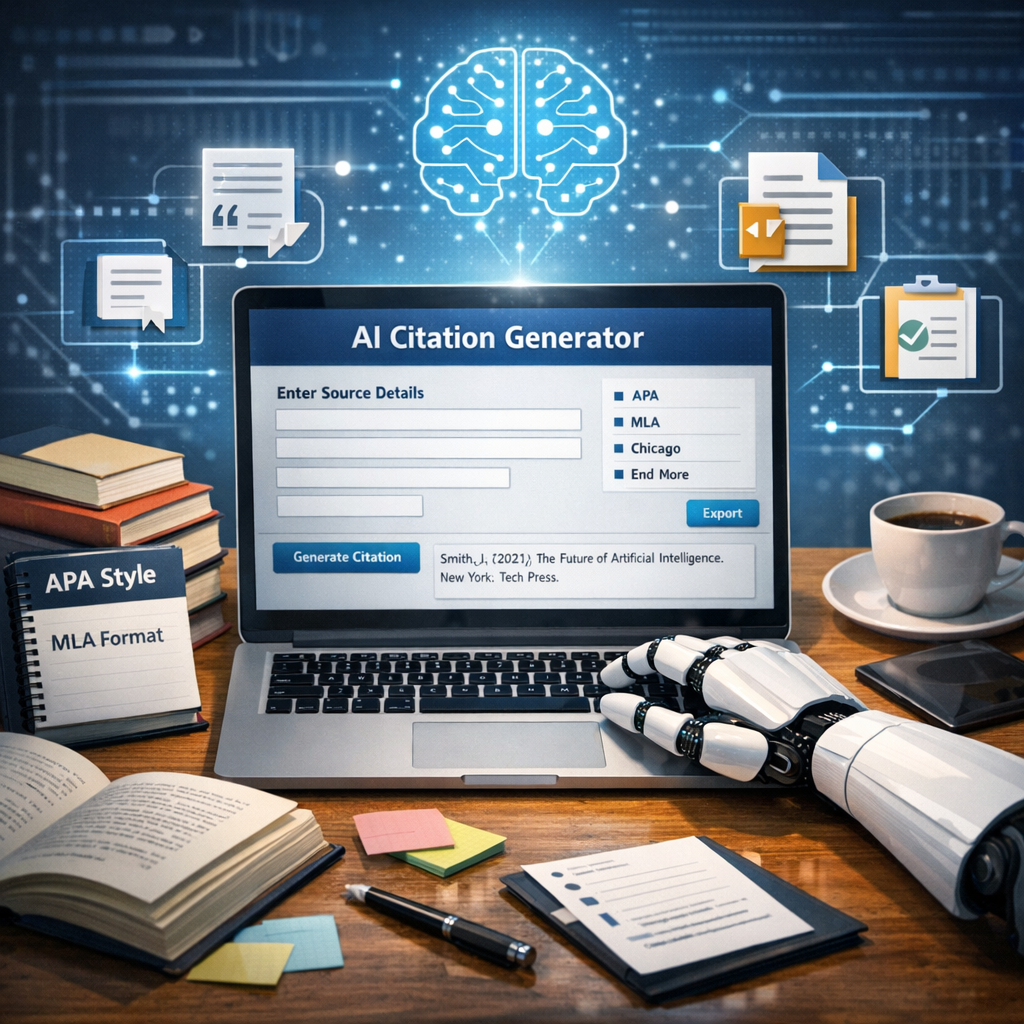
AI Citation Generator tools are changing the way students, researchers, writers, and professionals handle references. What used to take a frustrating amount of time—checking punctuation, italics, ordering, and style rules—can now be done in seconds with the help of smart automation. Whether you are writing an academic essay, a research paper, a blog post, or a business report, accurate citations matter. They strengthen credibility, prevent plagiarism, and help readers trace your sources easily.
In today’s fast-paced digital environment, citation tools powered by artificial intelligence have become more than just a convenience. They are quickly turning into an essential part of modern writing workflows.
Why Accurate Citations Matter
Citations do much more than satisfy formatting requirements. They show that your work is built on reliable information and that you respect intellectual property. In academic and professional writing, proper references signal trustworthiness and attention to detail.
Without accurate citations, writers may face several problems:
– Unintentional plagiarism
– Loss of credibility
– Lower academic grades
– Difficulty verifying sources
– Inconsistent formatting across documents
Even experienced writers can make citation mistakes, especially when switching between styles like APA, MLA, Chicago, or Harvard. A missing comma, incorrect author order, or wrong publication year can create unnecessary issues. That is exactly where AI-powered tools make a difference.
What Is an AI Citation Generator?
An AI citation generator is a smart digital tool that automatically creates citations based on source information. Instead of manually formatting every reference, users can enter a book title, article link, DOI, ISBN, or author name, and the tool generates a properly structured citation in the selected style.
Unlike basic citation builders, modern AI tools often go a step further. They can:
– Detect source types automatically
– Pull metadata from URLs or databases
– Suggest missing citation details
– Format in multiple styles instantly
– Organize references into a bibliography or works cited page
– Reduce human error
This means writers spend less time on formatting and more time focusing on ideas, analysis, and clarity.
Benefits of Using an AI Citation Generator
Saves Time and Effort
One of the biggest advantages is speed. Manually creating citations for multiple sources can be tedious, especially for long-form papers with dozens of references. AI tools can process source data in seconds, which helps writers stay productive.
Improves Accuracy
Citation rules are often detailed and easy to misapply. AI systems are designed to follow style guidelines more consistently than manual formatting. While users should still double-check output, the error rate is significantly reduced.
Supports Multiple Citation Styles
Writers often need to switch formats depending on the project. A student may use MLA for one assignment and APA for another. An AI citation generator allows users to change citation styles instantly without rewriting each source from scratch.
Helps Prevent Plagiarism
When sources are cited correctly, writers are less likely to unintentionally present borrowed ideas as their own. This is especially useful for students and content creators who work with large volumes of research material.
Makes Research More Organized
Many advanced tools do more than generate a single citation. They help collect, store, and manage references in one place. This makes it easier to build a complete bibliography and keep track of source material throughout a project.
Who Can Benefit from These Tools?
AI citation tools are useful for a wide range of users, not just academics.
Students
Students often work under tight deadlines and may not be fully confident with citation rules. A smart generator simplifies the process and reduces stress during essay and thesis writing.
Researchers
Researchers frequently work with large numbers of journal articles, books, and reports. Automated citation support helps maintain consistency across complex documents.
Bloggers and Content Writers
Online writers also benefit from clear source attribution, especially when citing studies, reports, or expert commentary. It adds authority to content and builds reader trust.
Educators
Teachers and professors can use these tools to prepare instructional materials, research papers, and recommended reading lists more efficiently.
Business Professionals
Reports, proposals, white papers, and presentations often include external data. Proper attribution strengthens professionalism and transparency.
Key Features to Look For
Not all tools offer the same quality, so it helps to know what to look for before choosing one.
Wide Style Support
A good tool should support major citation styles such as:
– APA
– MLA
– Chicago
– Harvard
– IEEE
Automatic Source Detection
The best platforms can scan a URL, DOI, ISBN, or database record and extract the correct details automatically.
Citation Editing Options
Sometimes metadata is incomplete or inaccurate. A useful generator should allow easy manual edits so users can fix author names, publication dates, or page numbers.
Bibliography Management
Creating individual citations is helpful, but full project organization is even better. Look for tools that let you save, sort, export, and manage multiple references at once.
Integration With Writing Tools
Some platforms connect with word processors, note-taking apps, or research databases. This makes the writing process smoother and more efficient.
Common Mistakes AI Tools Help Reduce
Even careful writers often struggle with citation formatting. AI tools help avoid common errors such as:
– Incorrect capitalization in titles
– Missing publication dates
– Wrong use of italics
– Inconsistent punctuation
– Confusing source types
– Mixing citation styles in one document
That said, no tool is perfect. AI should support your writing, not replace your judgment. Reviewing every citation before submission is still a smart habit.
Best Practices When Using an AI Citation Generator
To get the most from these tools, follow a few simple practices:
1. Verify source details before generating the citation.
2. Choose the correct citation style for your assignment or publication.
3. Review every generated entry for accuracy.
4. Keep your sources organized throughout the writing process.
5. Use reputable tools with updated formatting rules.
By combining automation with careful review, writers can create polished, trustworthy work without wasting time on technical formatting.
The Future of Smarter Referencing
As artificial intelligence continues to improve, citation tools are becoming more advanced, intuitive, and helpful. Future versions may offer deeper source validation, stronger integration with research platforms, and real-time citation suggestions while writing. For anyone who regularly works with references, that means less friction and better results.
Citations may never be the most exciting part of writing, but they are essential. With the right technology, they no longer have to be difficult. A reliable AI-powered citation tool makes the process faster, cleaner, and far less stressful.
Final Thoughts
A strong piece of writing depends not only on great ideas but also on proper source acknowledgment. AI citation tools help bridge the gap between research and polished presentation by making formatting easier, faster, and more accurate. For students racing deadlines, researchers handling complex projects, and writers aiming for professionalism, this type of tool has become a practical necessity.
In a world where content is created rapidly and information comes from countless sources, having a smart system for citations is no longer optional for many people. It is one of the simplest ways to improve workflow, maintain credibility, and write with confidence.