
AI Audio Enhancer: Must-Have Tool for Effortless Sound Quality
AI audio enhancer technology is changing the way people clean up, improve, and polish sound without needing advanced editing skills. Whether you are a podcaster, video creator, musician, online teacher, or business professional, clear audio matters more than ever. Poor sound can make even great content feel unprofessional, while clean, balanced audio instantly improves the listener’s experience.
In the past, achieving high-quality sound often required expensive software, studio gear, and a lot of technical knowledge. Today, artificial intelligence has made the process faster and far more accessible. With just a few clicks, users can reduce background noise, boost vocal clarity, balance volume, and restore weak recordings. This is exactly why so many creators now rely on AI-powered tools as part of their regular workflow.
What Is an AI Audio Enhancer?
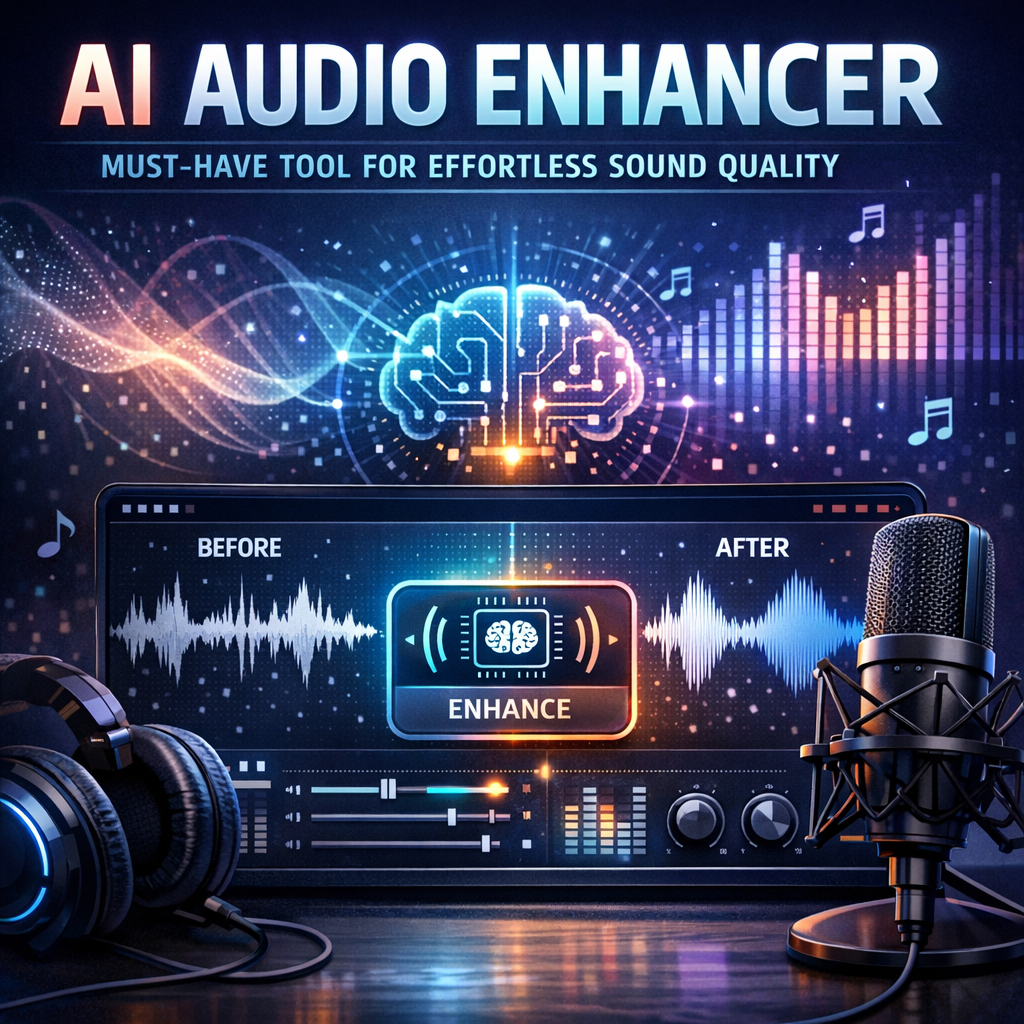
An AI audio enhancer is a software tool that uses machine learning and intelligent processing to improve the quality of audio recordings automatically. Instead of manually adjusting dozens of settings, the system analyzes the sound and applies corrections based on patterns it has learned from large audio datasets.
These tools can handle a wide range of common sound issues, including:
– Background noise
– Echo and reverb
– Uneven volume levels
– Muffled speech
– Hissing and static
– Distortion in lower-quality recordings
The biggest advantage is convenience. Users do not need to be sound engineers to get professional-sounding results. The tool identifies the problem areas and makes smart adjustments in seconds.
Why an AI Audio Enhancer Has Become Essential
Audio quality influences how people judge content. Listeners may tolerate average visuals, but they often stop engaging when sound is unclear or distracting. This makes audio enhancement a key part of creating content that feels polished and trustworthy.
Here are several reasons these tools have become essential:
1. They save time
Traditional audio editing can be slow and technical. AI speeds up the process by automating tasks that once took hours. This is especially helpful for creators working on deadlines.
2. They improve accessibility
Not everyone has the budget for a professional studio or editor. AI makes quality enhancement available to freelancers, students, startups, and small creators.
3. They support remote work and online communication
Meetings, webinars, online classes, and interviews often suffer from room noise or weak microphones. AI tools can improve speech clarity, making communication more effective.
4. They help content stand out
In crowded digital spaces, sound quality can influence whether an audience keeps listening. Cleaner audio creates a better first impression and improves audience retention.
How AI Audio Enhancement Works
Most AI audio tools follow a similar process. First, the software listens to the recording and identifies patterns such as voice, noise, silence, or distortion. Then it separates unwanted elements from the main audio and applies improvements.
Some systems focus specifically on speech enhancement, while others are designed for music, podcasts, or video production. Common features include:
– Noise reduction: removes fans, traffic, keyboard clicks, and other background distractions
– Voice enhancement: makes spoken words clearer and more present
– Auto-leveling: balances volume so loud and quiet sections sound more even
– Audio restoration: repairs damaged or low-quality recordings
– De-essing and de-reverb: reduces harsh “s” sounds and room echo
The more advanced the tool, the more accurately it can process complex recordings without making them sound artificial.
Best Use Cases for an AI Audio Enhancer
One of the reasons this technology is so popular is its flexibility. It can be useful across many industries and content types.
Podcasters
Podcasters often record in home setups where noise and echo are hard to avoid. AI enhancement can make episodes sound cleaner and more consistent.
Video creators
For YouTubers, course creators, and marketers, stronger audio improves overall production value. Even simple phone or camera recordings can sound much better after enhancement.
Musicians and producers
AI tools can help clean demo tracks, remove unwanted noise, and improve vocal presence before deeper mixing begins.
Businesses
Companies use enhanced audio for presentations, training materials, customer support recordings, and virtual meetings. Clear sound helps information feel more professional and easier to follow.
Journalists and interviewers
Interview recordings taken in public places or over calls can be difficult to hear. AI restoration can recover speech and reduce distractions.
Features to Look for in an AI Audio Enhancer
Not every tool offers the same experience, so it helps to know what matters most before choosing one.
Ease of use
A clean interface and simple workflow are important, especially for beginners. The best tools provide strong results without requiring technical expertise.
Real-time or fast processing
If you create content regularly, speed matters. Quick enhancement saves valuable editing time.
Support for different file types
Look for compatibility with common audio and video formats so you can use the tool across multiple projects.
Natural sound output
Good enhancement should improve the recording without making voices sound robotic or overprocessed.
Customization options
Automatic enhancement is helpful, but manual control can be valuable when you want to fine-tune the final result.
Cloud-based access
Some AI tools work directly in the browser, which is ideal for users who want convenience and do not want to install heavy software.
Benefits Beyond Sound Quality
The value of AI audio enhancement goes beyond simply making recordings sound cleaner. It can also improve workflow, confidence, and overall content performance.
Creators often feel more comfortable publishing when they know their sound is clear. Teams can communicate more effectively during meetings and online sessions. Brands can produce more polished content without hiring full audio production teams for every project.
There is also a financial benefit. By reducing the need for retakes, manual editing, and expensive production support, AI tools lower the overall cost of creating high-quality audio.
Are There Any Limitations?
While AI audio enhancers are impressive, they are not magic. Extremely poor recordings with heavy distortion, overlapping voices, or severe clipping may not be fully repairable. The best results still come from starting with the cleanest recording possible.
It is also important to avoid relying too heavily on automation. In some cases, manual adjustments are still useful for preserving tone, emotion, and nuance. AI should be seen as a powerful assistant, not always a complete replacement for human judgment.
The Future of Smarter Audio Editing
As AI continues to evolve, audio enhancement tools will likely become even more accurate, personalized, and integrated into everyday apps. We can expect smarter voice isolation, better music restoration, improved multilingual speech cleanup, and faster real-time enhancement for calls and live streaming.
This means high-quality audio will no longer be limited to professionals with expensive setups. More people will be able to produce clear, engaging sound from almost anywhere.
Final Thoughts
Strong audio has become a basic expectation in digital content, not a bonus. That is why AI-powered enhancement tools are gaining so much attention. They make it easier to fix common sound problems, improve clarity, and create a more professional listening experience with minimal effort.
For anyone who records podcasts, videos, courses, interviews, or business content, using an AI-driven audio solution is no longer just convenient. It is a practical way to save time, improve quality, and keep audiences engaged.