
AI Interview Tools: Best Must-Have Picks for Effortless Hiring
AI interview tools are reshaping the way companies find, assess, and hire talent. In a market where recruiters are expected to move faster, reduce bias, and still make high-quality hiring decisions, these tools offer a practical edge. From automating interview scheduling to analyzing candidate responses and generating insights, AI-powered platforms help teams save time without sacrificing the human side of recruitment.
Hiring has never been simple. Recruiters often juggle hundreds of applications, multiple stakeholders, and tight timelines. Traditional interview processes can be inconsistent, slow, and difficult to scale. That is why many organizations are now turning to intelligent hiring technology to create a smoother and more effective process.
Why Companies Are Adopting AI in Hiring
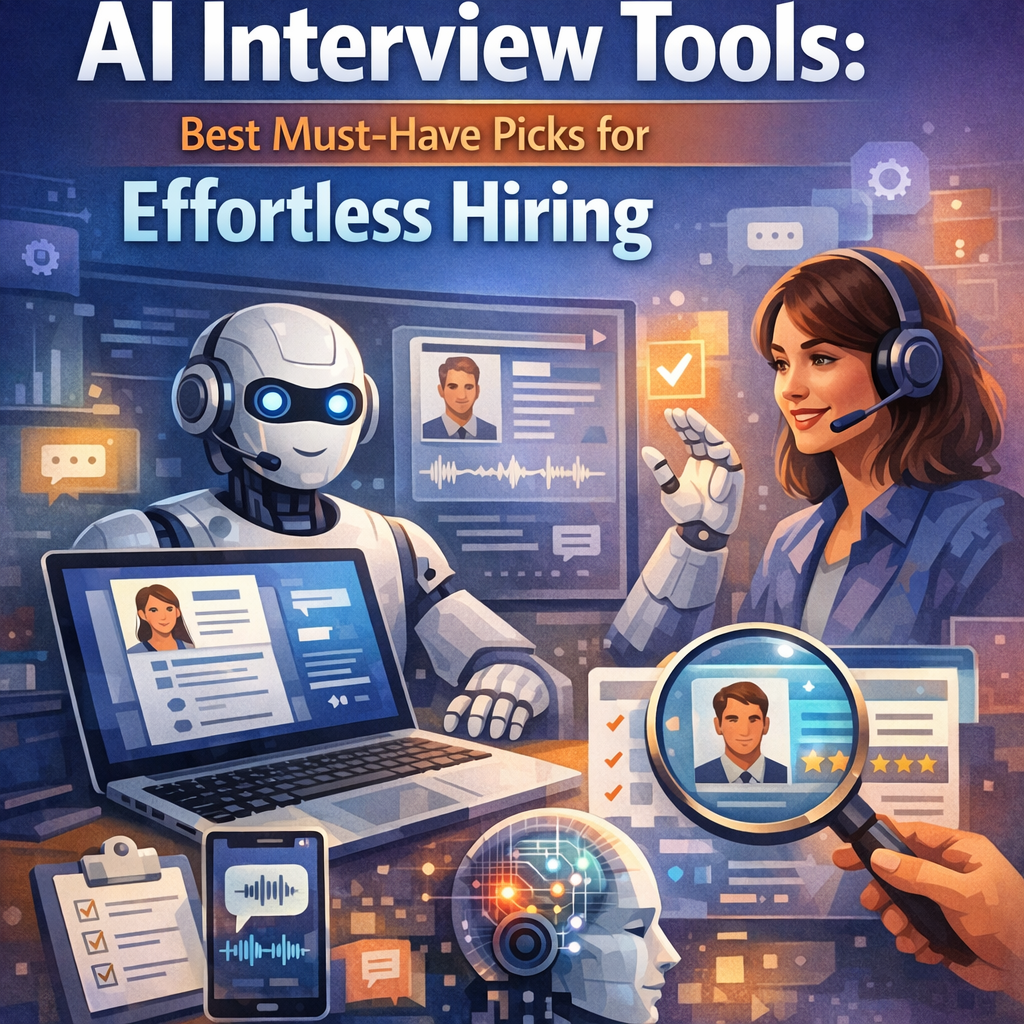
Recruitment teams are under constant pressure to do more with less. AI helps by taking care of repetitive and time-consuming tasks, allowing hiring professionals to focus on what matters most: building relationships and making thoughtful decisions.
Some of the biggest benefits include:
– Faster candidate screening
– More efficient interview scheduling
– Better organization of candidate data
– Consistent evaluation criteria
– Improved communication throughout the hiring process
– Stronger support for remote and high-volume hiring
AI does not replace recruiters. Instead, it acts as a powerful assistant that improves speed, structure, and decision-making.
What to Look for in AI Interview Tools
Not all platforms offer the same value. The best solution depends on your hiring goals, company size, and workflow. Before investing in a platform, it helps to understand which features matter most.
1. Automated Interview Scheduling
One of the biggest recruitment bottlenecks is scheduling. Good tools integrate with calendars, suggest time slots, send reminders, and reduce the back-and-forth emails that slow everything down.
2. Video Interviewing Capabilities
Many modern hiring platforms offer one-way and live video interviews. This is especially useful for distributed teams or companies managing a large number of applicants.
3. Interview Intelligence and Transcription
Some AI platforms can transcribe interviews, summarize key points, and highlight candidate responses. This makes it easier for hiring teams to review interviews and collaborate without relying only on handwritten notes.
4. Structured Evaluation Tools
Consistency matters in hiring. Platforms that provide scorecards, question templates, and competency-based evaluation systems can improve fairness and make comparisons more reliable.
5. ATS Integration
A tool should fit into your existing recruitment stack. Integration with applicant tracking systems helps keep data centralized and avoids unnecessary manual work.
6. Bias Reduction Features
While AI is not automatically bias-free, some solutions are designed to support more objective decision-making by standardizing interview questions and evaluation methods.
Best Must-Have Picks for Effortless Hiring
Below are some of the most useful categories and standout types of tools hiring teams should consider.
AI Interview Tools for Automated Screening
These tools are ideal for early-stage hiring when recruiters need to narrow down a large pool of candidates quickly. They can assess qualifications, rank applications, and help recruiters identify strong matches based on pre-set criteria.
This is especially valuable for:
– Entry-level hiring
– Seasonal recruitment
– Customer support roles
– Sales and operations hiring
– Large-scale talent acquisition campaigns
Automated screening can significantly cut down the time spent manually reviewing resumes, but it should always be paired with human oversight to ensure quality and fairness.
AI Interview Tools for Video Assessments
Video interview platforms powered by AI can help companies evaluate candidates at scale. They often include features such as interview recording, guided question workflows, response analysis, and easy sharing with hiring managers.
These tools are useful when:
– Time zones make live interviews difficult
– Hiring managers want flexibility
– Teams need to compare candidates consistently
– Recruiters are handling high application volume
The best platforms make the experience easy for candidates while giving employers structured insights they can actually use.
Interview Intelligence Platforms
Interview intelligence tools focus on capturing and analyzing conversations. They can transcribe interviews in real time, summarize discussions, identify recurring themes, and help teams review interviews more accurately.
This type of tool is especially helpful for companies that want to:
– Improve interview quality
– Reduce note-taking distractions
– Share feedback more efficiently
– Train hiring managers
– Maintain a more consistent hiring process
By turning interviews into searchable, organized data, these tools make collaboration much easier across recruiting teams.
Candidate Engagement and Communication Tools
A great hiring process is not just about evaluating talent. It is also about creating a positive candidate experience. AI-driven engagement tools can send updates, answer common questions, and keep applicants informed throughout the process.
That matters because poor communication is one of the biggest reasons candidates lose interest. Fast, clear interaction helps companies appear more organized, responsive, and professional.
Useful features may include:
– Chatbots for common candidate questions
– Personalized status updates
– Interview reminders
– Feedback requests
– Offer-stage communication support
How AI Interview Tools Improve Hiring Quality
Speed is important, but quality is where these platforms can make a real difference. When used properly, they help hiring teams stay organized, ask better questions, and evaluate applicants using more structured criteria.
Here is how that leads to better outcomes:
– Interviewers spend less time on admin tasks
– Teams can review candidate data more clearly
– Feedback is easier to collect and compare
– Hiring decisions become more evidence-based
– Candidate experience becomes smoother and more professional
In many companies, hiring quality suffers when interviewers are rushed or inconsistent. AI-supported workflows help create more reliable systems that support stronger decisions.
Important Considerations Before You Choose
Even the best hiring technology requires thoughtful implementation. Before selecting a platform, consider these questions:
– Is the tool easy for both recruiters and candidates to use?
– Does it support your hiring volume and process?
– Can it integrate with your current systems?
– Does it offer transparency in how AI is used?
– Are there safeguards for fairness, privacy, and compliance?
– Will your team actually adopt it?
It is also important to avoid over-automating the process. Candidates still want human interaction, especially in later hiring stages. The strongest approach combines efficiency with empathy.
The Future of Smarter Recruiting
AI is no longer a futuristic idea in talent acquisition. It is already a practical solution for teams looking to hire faster and more intelligently. As hiring becomes more competitive and candidate expectations continue to rise, companies that adopt the right tools will be better positioned to attract and secure top talent.
The key is choosing solutions that remove friction rather than create it. The most effective platforms simplify workflows, support fairer evaluations, and help recruiters spend more time on meaningful conversations.
For businesses aiming to build a more efficient hiring process, AI interview technology is quickly becoming less of a luxury and more of a necessity. When used strategically, it can turn a complicated recruitment process into one that feels far more manageable, scalable, and successful.