
AI Recruitment Tools: Best Must-Have Solutions for Effortless Hiring
AI recruitment tools are transforming how companies find, assess, and hire talent. What once required endless hours of manual screening, back-and-forth scheduling, and inconsistent evaluations can now be streamlined with smart, data-driven systems. For hiring teams under pressure to move faster without sacrificing quality, these solutions are no longer a luxury—they are becoming an essential part of modern recruitment.
From startups building their first teams to enterprises managing high-volume hiring, AI can remove bottlenecks and improve the candidate experience. The key is understanding which tools actually solve real hiring problems and how to use them effectively.
Why Hiring Teams Are Turning to Automation
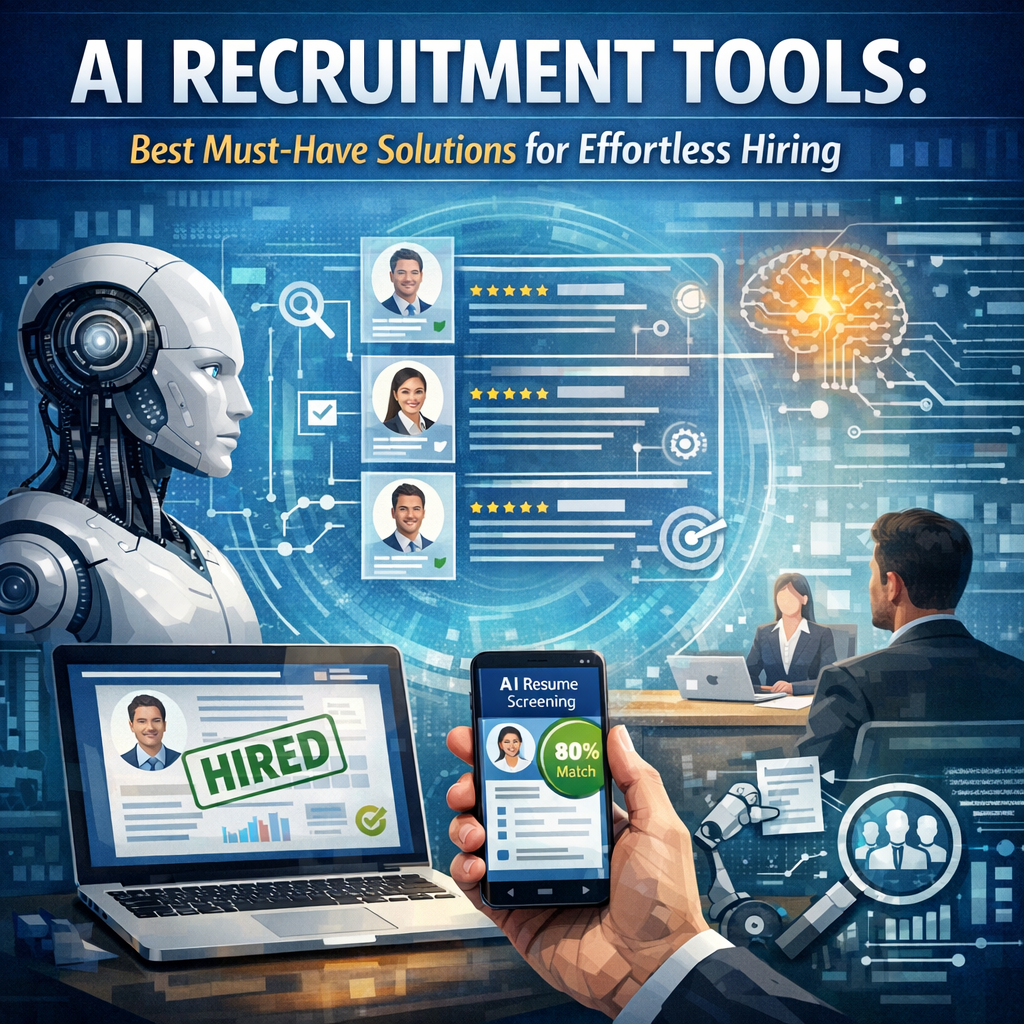
Recruitment has always involved a mix of speed, intuition, and strategy. But as applicant volumes grow and competition for talent increases, traditional hiring methods often struggle to keep up. Recruiters can spend hours reviewing resumes, coordinating interviews, and responding to candidates, leaving less time for relationship-building and strategic decision-making.
That is where intelligent hiring platforms add value. They help teams:
– Screen candidates faster
– Reduce repetitive administrative tasks
– Improve consistency in evaluations
– Enhance communication with applicants
– Identify stronger matches based on skills and experience
– Make better use of recruitment data
Used properly, these tools do not replace recruiters. Instead, they support them by handling time-consuming work and surfacing insights that might otherwise be missed.
Must-Have AI Recruitment Tools for Modern Hiring
Not every recruitment platform serves the same purpose. The most effective hiring strategy often includes a combination of solutions, each addressing a different stage of the process.
1. AI-Powered Applicant Tracking Systems
An applicant tracking system, or ATS, is often the foundation of a recruitment tech stack. Modern ATS platforms powered by AI go beyond storing resumes. They can rank candidates, parse applications, suggest matches, and automate workflows.
Key benefits include:
– Centralized candidate management
– Resume parsing and skill identification
– Automated job posting distribution
– Candidate scoring and prioritization
– Better visibility into hiring pipelines
A smart ATS helps recruiters spend less time sorting through applications and more time evaluating qualified talent.
2. Resume Screening and Candidate Matching Tools
One of the biggest challenges in hiring is filtering large applicant pools. AI screening tools can analyze resumes against job requirements and highlight candidates whose experience, qualifications, and skills align most closely with the role.
These tools are especially useful for:
– High-volume recruitment
– Technical hiring
– Roles with clear qualification criteria
– Reducing manual shortlist creation
However, screening tools are most effective when job descriptions are well-written and based on realistic requirements. Poor input still leads to poor output, even with advanced technology.
3. AI Chatbots for Candidate Engagement
Candidates expect quick responses, especially in competitive job markets. AI chatbots can answer common questions, collect basic information, guide applicants through the process, and provide updates outside working hours.
This improves efficiency while also creating a smoother candidate experience.
Chatbots can help with:
– Answering FAQs about roles or company policies
– Collecting pre-screening information
– Sharing next steps and status updates
– Scheduling interviews
– Supporting career site engagement
For employers, this means fewer delays and a more responsive hiring process from the first interaction.
How AI Recruitment Tools Improve the Candidate Experience
Recruitment is not just about filling vacancies. It is also about how candidates feel throughout the process. Long silences, unclear timelines, and repetitive steps can quickly damage employer reputation.
Faster Communication and Better Transparency
Many hiring frustrations come from a lack of communication. AI-powered systems can send timely updates, confirm application receipt, remind candidates of interview details, and keep the process moving.
This does not just save time for recruiters. It shows respect for candidates’ time and effort.
More Personalized Interactions at Scale
With the right setup, AI can deliver tailored messages based on role, location, experience level, or stage in the hiring funnel. That creates a more personalized experience, even when managing hundreds of applicants at once.
Reduced Friction in Scheduling
Interview scheduling is one of the most common sources of delay. AI scheduling tools can coordinate calendars, offer available time slots, and reduce the endless email exchanges that often slow hiring down.
Other Essential Solutions Worth Considering
Beyond core screening and workflow automation, there are several other tools that can make recruitment more effective.
Interview Intelligence Platforms
These tools help structure interviews, capture notes, and analyze patterns in candidate responses. Some platforms even provide insights into speaking time, question consistency, and interview quality.
This can improve fairness and help teams make more informed decisions.
Skills Assessment Tools
For many roles, especially in tech, sales, design, or customer support, resumes alone do not tell the full story. AI-driven assessment tools can evaluate practical ability through tests, simulations, and role-specific challenges.
This helps employers focus on capability rather than keyword-heavy resumes.
Predictive Analytics for Hiring Decisions
Some advanced platforms use historical hiring data to identify patterns linked to successful employees. They may help forecast time-to-hire, source effectiveness, or candidate success likelihood.
While these insights should never replace human judgment, they can strengthen hiring strategy and planning.
Choosing the Right AI Recruitment Tools
The best solution depends on your company’s hiring volume, goals, and existing workflow. Before investing, it helps to ask a few practical questions:
– Which hiring tasks take up the most time?
– Where are candidates dropping off?
– Do recruiters need better screening, scheduling, or reporting?
– Will the tool integrate with current HR systems?
– How transparent is the AI decision-making process?
– Can the platform help reduce bias rather than reinforce it?
It is also important to involve recruiters and hiring managers in the selection process. A tool may look impressive in a demo, but if it is difficult to use or does not fit daily workflows, adoption will be limited.
Important Considerations Before Implementation
AI can improve hiring, but it should be introduced thoughtfully. Employers should pay attention to:
– Bias and fairness: AI models can reflect biased data if not monitored carefully.
– Data privacy: Candidate information must be handled securely and in compliance with regulations.
– Human oversight: Final hiring decisions should always involve people, not just algorithms.
– Candidate perception: Automation should feel helpful, not cold or impersonal.
The most successful organizations use AI to support recruiters, not to remove the human element that makes hiring more thoughtful and relationship-driven.
The Future of Smarter Hiring
Recruitment is becoming more data-informed, automated, and candidate-focused. As AI capabilities continue to grow, hiring teams will have better tools to identify talent, improve speed, and create more consistent processes.
Still, technology works best when paired with clear hiring goals, strong employer branding, and human judgment. Companies that combine efficiency with empathy will be in the best position to attract and retain great people.
Final Thoughts on AI Recruitment Tools
AI recruitment tools are helping employers simplify complex hiring tasks, improve decision-making, and deliver a better experience for candidates. Whether through applicant tracking, resume screening, chatbot communication, interview support, or analytics, these solutions can remove major points of friction from the hiring journey.
For teams looking to hire more efficiently without losing quality, the right mix of AI-powered tools can make recruitment faster, smarter, and far more manageable.