
AI Hiring Tools: Best Must-Have Solutions for Smarter Recruiting
AI hiring tools are changing the way companies find, evaluate, and hire talent. What once required endless hours of manual screening, scheduling, and follow-up can now be streamlined with smart software that improves efficiency and supports better decision-making. For recruiters and hiring managers, these tools are no longer a nice bonus—they are becoming essential for staying competitive in a fast-moving talent market.
Hiring has grown more complex in recent years. Employers are expected to move quickly, deliver a better candidate experience, reduce bias, and still make high-quality hires. That is a difficult balance to achieve with traditional methods alone. Artificial intelligence helps by automating repetitive tasks, organizing large amounts of data, and identifying patterns that humans may miss.
Why AI Matters in Modern Recruiting
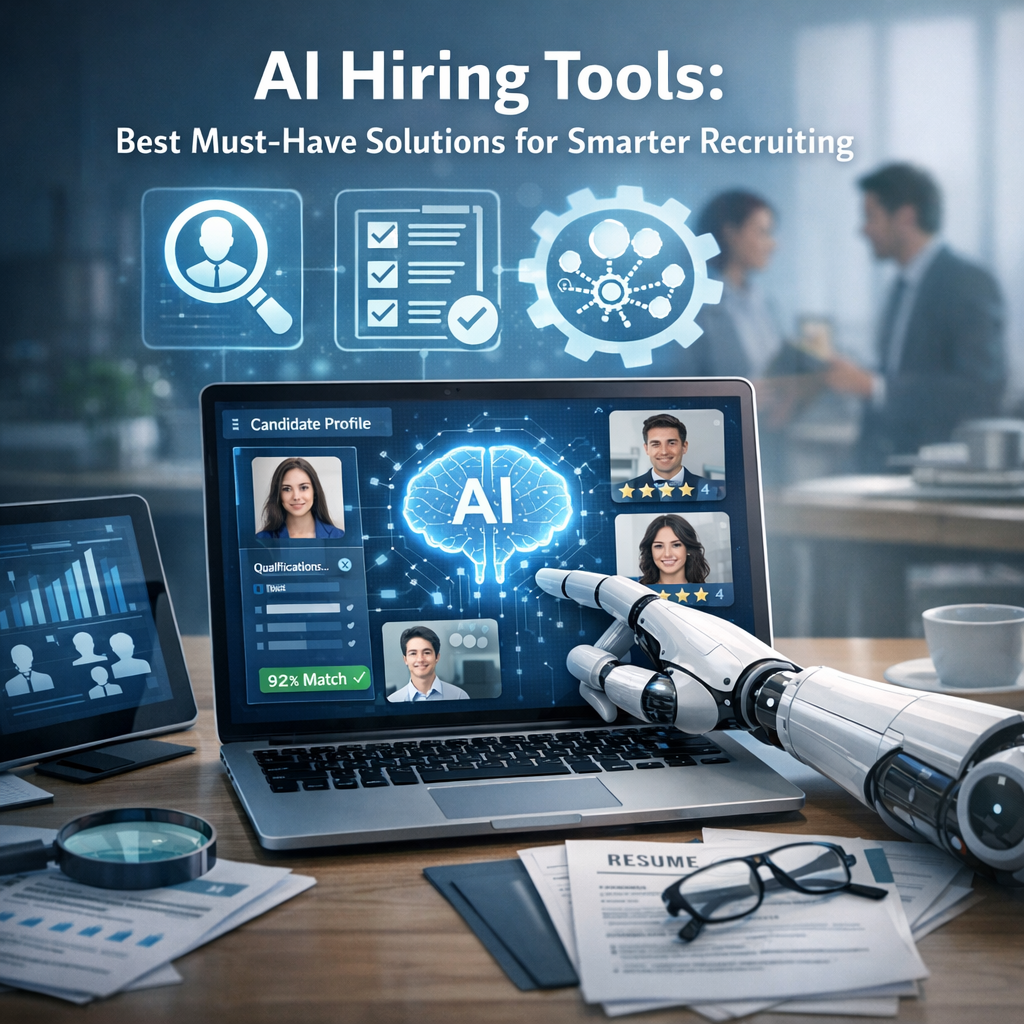
Recruiting teams often spend too much time on administrative work and not enough on building relationships with candidates. Reviewing hundreds of resumes, coordinating interview times, answering repetitive questions, and tracking applicant progress can slow the process down. When hiring drags on, businesses risk losing top candidates to faster-moving competitors.
AI can help solve these challenges in several ways:
– Faster resume screening
– Automated interview scheduling
– Smarter candidate matching
– Improved communication with applicants
– Better analytics for hiring decisions
– Reduced manual workload for recruiters
The right tools do not replace recruiters. Instead, they support recruiters by freeing them from repetitive tasks and giving them clearer insights.
Must-Have AI Hiring Tools for Smarter Recruiting
Not every company needs the same recruiting technology stack, but there are several categories of AI-powered solutions that provide strong value across industries and team sizes.
1. AI Resume Screening Tools
One of the most common uses of AI in recruitment is resume screening. These tools scan applications, identify relevant skills, experience, and qualifications, and rank candidates based on how closely they match a job description.
This can dramatically reduce the time spent reviewing applications manually, especially for roles that attract a high volume of applicants. Good screening tools also help surface candidates who may have been overlooked in a quick human review.
What to look for:
– Skill and keyword matching
– Context-aware resume analysis
– Custom scoring models
– Integration with your applicant tracking system
– Bias-reduction features
2. AI-Powered Applicant Tracking Systems
A modern applicant tracking system, or ATS, often includes AI features that go beyond simple record-keeping. These platforms can recommend top candidates, identify hiring bottlenecks, and automate parts of the recruiting workflow.
An AI-enhanced ATS becomes the central hub for hiring activity. It keeps the process organized while helping teams make smarter decisions with data.
Helpful features include:
– Candidate ranking
– Automated job posting distribution
– Workflow automation
– Predictive hiring analytics
– Centralized communication history
3. Candidate Sourcing Platforms
Finding the right talent is one of the hardest parts of recruiting. AI sourcing tools search databases, professional networks, and public profiles to identify potential candidates who fit open roles. Some platforms also help recruiters build outreach lists and personalize first-contact messages.
These tools are especially useful for hard-to-fill positions where active applicants are limited and passive candidates are a major source of talent.
Benefits of AI sourcing tools:
– Faster talent discovery
– Broader candidate reach
– Better-fit recommendations
– Less manual search time
– More targeted outreach
4. AI Chatbots for Candidate Engagement
Candidates expect timely communication, but recruiting teams cannot always respond instantly. AI chatbots help fill that gap by answering common questions, sharing application updates, and guiding candidates through the next steps.
This improves the candidate experience while reducing the number of routine inquiries that recruiters need to handle manually.
A strong chatbot can assist with:
– Application status updates
– Frequently asked questions
– Basic pre-screening questions
– Interview preparation tips
– Scheduling support
When used well, chatbots make the process feel more responsive and organized.
5. Interview Scheduling Tools
Interview coordination often becomes a hidden time drain. AI scheduling tools sync with calendars, suggest open time slots, handle time zones, and automate reminders. This may sound simple, but it can save hours of back-and-forth emails every week.
For companies hiring at scale, scheduling automation helps maintain speed without sacrificing professionalism.
6. Video Interviewing and Assessment Platforms
Some AI-driven interview platforms analyze responses, assess communication patterns, or score answers based on job-specific criteria. Others focus on structured assessments, coding tests, or situational judgment exercises.
These tools can support more consistent evaluations, especially when multiple interviewers are involved. However, they should be used carefully and transparently to ensure fairness and maintain candidate trust.
Best practices include:
– Using AI insights as one input, not the final decision
– Informing candidates when AI is involved
– Validating assessments regularly
– Avoiding overreliance on automated scoring
How AI Hiring Tools Improve Recruiter Performance
AI is most effective when it helps recruiters focus on human-centered work. Instead of spending most of the day managing logistics, recruiters can spend more time engaging with candidates, collaborating with hiring managers, and refining strategy.
Here are some of the biggest improvements organizations often see:
Better Efficiency
Tasks that once took hours can be completed in minutes. Screening, scheduling, and candidate communication all move faster.
Improved Quality of Hire
AI can identify patterns in successful hires, helping teams refine their selection criteria and target stronger candidates.
More Consistent Processes
Standardized screening and assessments reduce variation across teams and make hiring workflows easier to manage.
Enhanced Candidate Experience
Faster responses, smoother scheduling, and clearer communication create a more professional and candidate-friendly process.
Choosing the Right AI Hiring Tools
Not every platform will be the right fit for every organization. Before investing in new technology, it helps to evaluate your current challenges and hiring goals.
Ask these questions:
– Where is your recruiting process slowing down?
– Which tasks consume the most manual effort?
– Do you need help with sourcing, screening, communication, or analytics?
– Will the tool integrate with your existing HR systems?
– Does it offer transparency and support fair hiring practices?
It is also important to involve recruiters and hiring managers in the selection process. A tool may look powerful on paper, but if it is difficult to use, adoption will suffer.
Important Considerations Before Implementation
While AI offers major advantages, it should be introduced thoughtfully. Recruitment is ultimately about people, and technology should support fairness, clarity, and accountability.
Keep these points in mind:
– Review algorithms for potential bias
– Maintain human oversight in final decisions
– Communicate clearly with candidates about how technology is used
– Monitor outcomes and adjust processes regularly
– Train teams to use the tools effectively
The best results come when AI is combined with good hiring strategy, not used as a shortcut.
The Future of Recruiting Technology
Recruiting will continue to evolve as AI becomes more advanced. Future tools are likely to offer deeper talent insights, stronger predictive analytics, and more personalized candidate experiences. At the same time, companies will need to balance innovation with ethics, compliance, and transparency.
Organizations that adopt the right solutions now will be better positioned to hire faster, compete for top talent, and build stronger teams over time.
Final Thoughts
AI hiring tools are helping companies recruit with greater speed, precision, and confidence. From resume screening and sourcing to chatbots and analytics, these solutions can make the hiring process more efficient and more effective. The key is choosing tools that align with your needs, support your team, and enhance rather than replace the human side of recruiting.
When used strategically, AI can turn recruiting from a reactive process into a smarter, more proactive advantage.